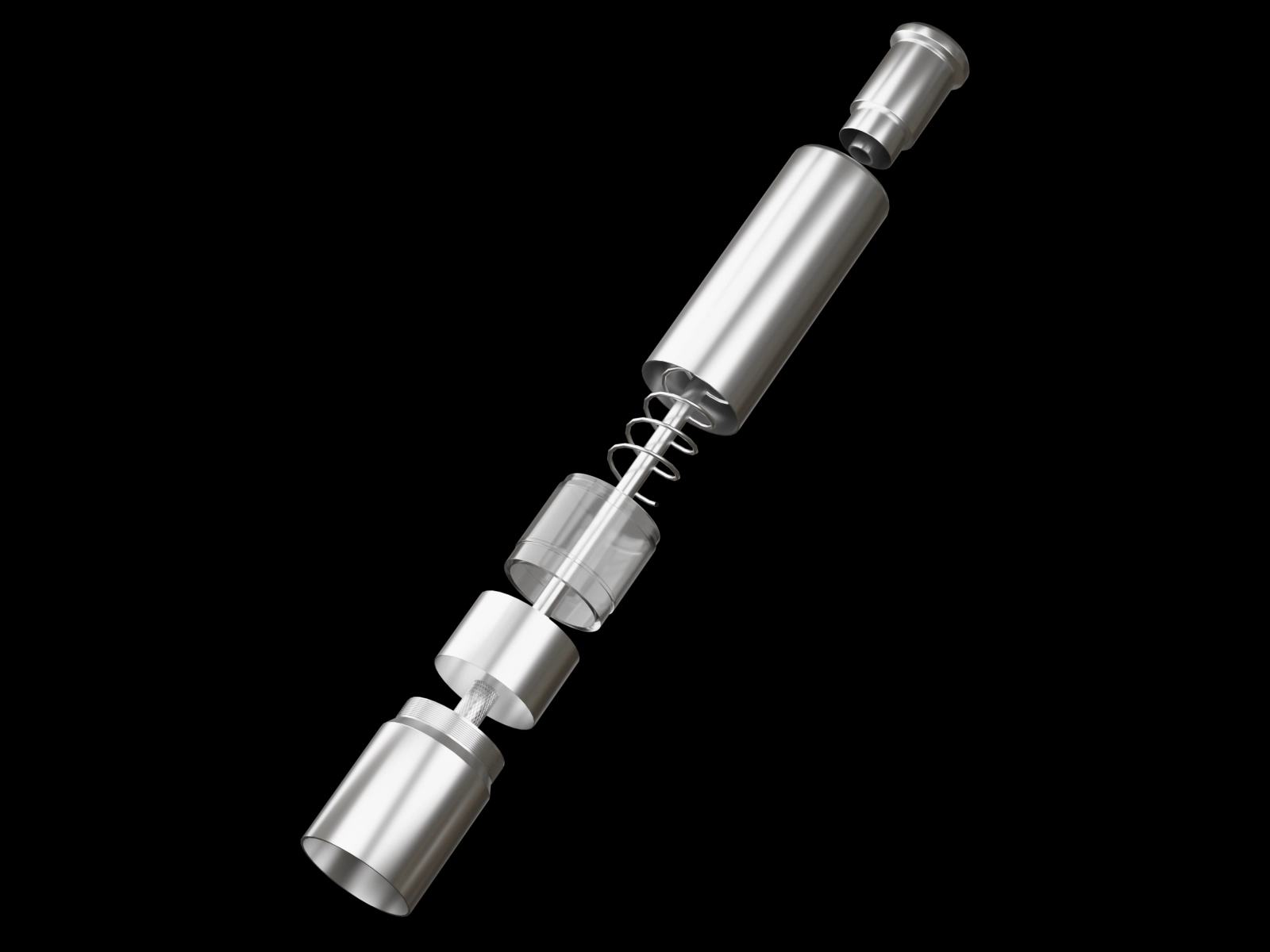
There is a category of product that simply cannot be photographed sensibly: things that weigh half a tonne, take two days to install, exist in eleven configurations, or have not been built yet. Industrial and B2B equipment manufacturers hit this wall constantly, and it is the clearest case for 3D visualisation anywhere in ecommerce.
The photography maths does not work
Consider a modular conveyor system sold in six lengths with four end-cap options. Photographing every combination means assembling twenty-four configurations in a studio large enough to hold them, lighting each consistently, and repeating the exercise when a component changes.
Now consider the same job in 3D. The system is modelled once. Configurations are assembled digitally. A design revision propagates to every image in the set. The cost curve inverts: photography gets more expensive per variant, 3D gets cheaper.
This is why the industrial sector adopted CGI earlier than consumer ecommerce did. The economics were never close.
What buyers in this category actually need to see
B2B purchasing is a longer, more technical process, and the imagery has to carry more weight than a hero shot.
Installation context. A plant manager needs to know how the unit sits in a real space, what clearance it demands, where the service access is. Rendering the machine into a plausible facility answers questions a white-background shot cannot.
Internal assemblies. Maintenance cost is a purchasing criterion. Showing the serviceable parts, the wear components, and how they come apart directly addresses total cost of ownership.
Configuration comparison. When the same base unit ships in multiple specifications, a consistent visual set lets the buyer compare like with like. Mixed photography across model years makes that impossible.
Scale. Industrial buyers misjudge dimensions as readily as consumers do. A human figure or a standard pallet in frame is worth a paragraph of specification text.
Pre-manufacture selling
The most valuable application is selling equipment before it exists. If your engineering team has finished the CAD but the first unit is six months from the factory floor, 3D lets you take pre-orders, run a trade show, brief distributors and build a catalogue on the design alone.
For capital equipment with long lead times, this is not a marketing nicety. It is cash flow. Several of the manufacturers we work with treat the render set as a deliverable of the design phase, not the marketing phase, precisely because it unlocks sales activity months earlier.
Working from engineering CAD
Industrial clients usually have the best source material of any category, and it is worth understanding what happens to it.
Engineering CAD is built for manufacture, not for rendering. It contains internal geometry nobody will see, thread detail that adds millions of polygons, and no material information beyond a part designation. The studio's job is to translate that into something that renders efficiently while staying dimensionally honest.
What this means in practice:
- STEP files are ideal. Native SolidWorks, Inventor or Creo files also work.
- Assemblies are better than individual parts, because the relationships are preserved.
- You will be asked about materials, because CAD rarely carries them. Powder-coat colours, anodising, brushed versus polished stainless, all need specifying.
- Simplification is normal and expected. A good studio removes hidden internals without changing anything visible or dimensional.
Where the assets earn their keep
Industrial render sets tend to have a longer working life than consumer imagery, which changes the return calculation:
- Distributor catalogues and dealer portals
- Technical datasheets and specification documents
- Trade show graphics, often at very large print sizes
- Tender and RFP submissions, where visual clarity separates you from competitors submitting photocopied line drawings
- Training and installation documentation
- Website configurators, if you sell modular systems
One modelling investment supports all of it, for years, across product revisions.
A sensible starting point
If you are evaluating this, do not start with the whole catalogue. Pick the single product that is hardest to photograph and most important to sell, and render that. It gives you a real cost benchmark, tests whether the studio can handle your CAD, and produces something immediately useful. Scaling to the rest of the range is a straightforward decision once you have seen one done properly.
See this quality on your own product
First-time clients get a complete, high-resolution 3D render of their product for $130. Judge the quality before committing to a full package.