A product built from nothing but its own print file
Karma Fitness sent one PDF. It was the artwork that gets printed on the mat, flat, with no product, no photograph and no dimensions attached.
- Client
- Karma Fitness
- Market
- United Kingdom
- Product
- Large Exercise Mat
- Scope
- Modelling and product renders
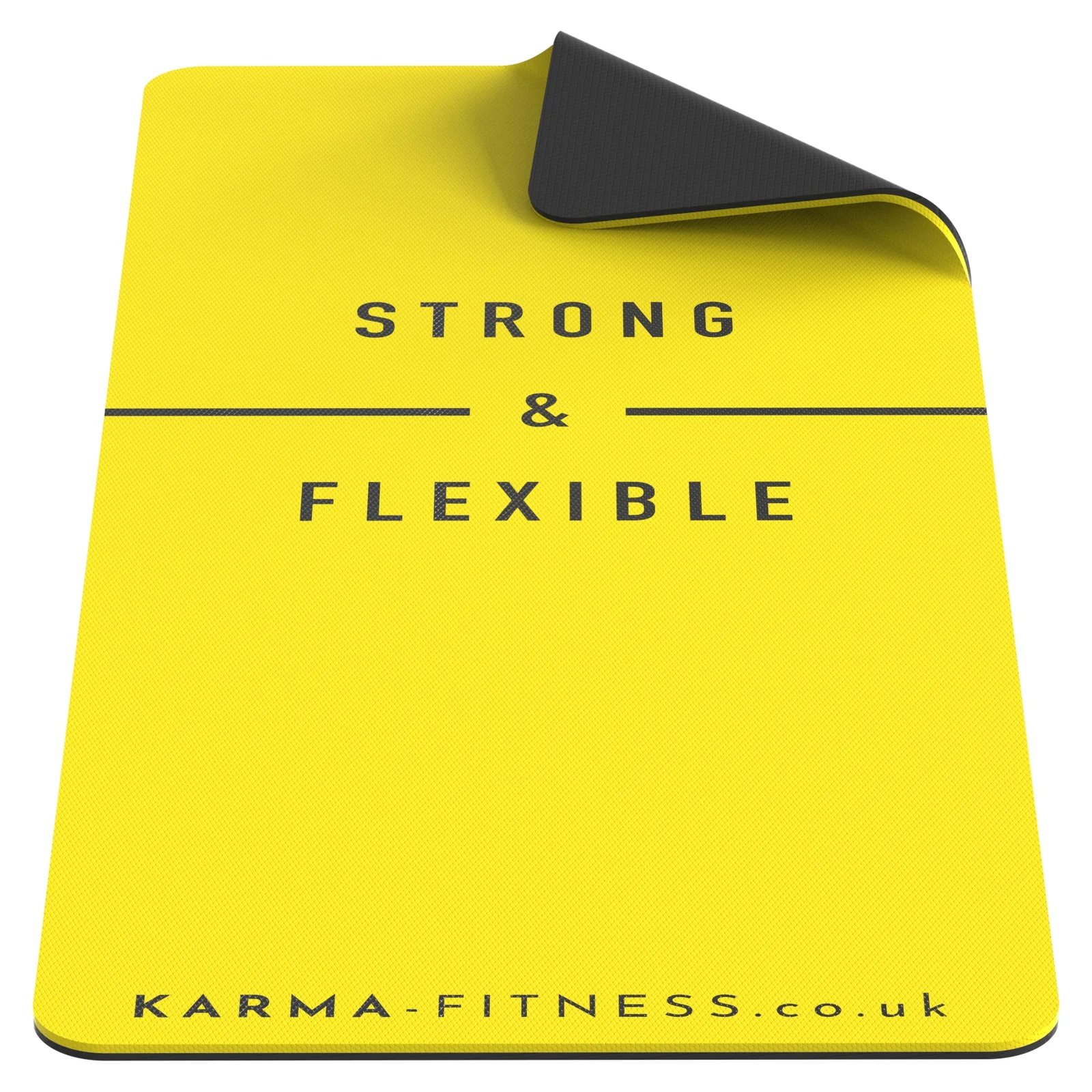
The entire brief was one flat PDF
Not a photograph of a mat. Not a drawing. The print file, the thing a factory sends to a press.
It arrives as a tall yellow rectangle with the words STRONG and FLEXIBLE stacked either side of a rule, and the web address along the bottom. That is genuinely all of it. There is no mat in the file, because the file is what goes onto a mat that has not been made yet.
Everything else has to be inferred. The proportions of the artwork give the proportions of the mat, since the print is laid out for a specific size. The rest, thickness, corner radius, how the surface catches light, comes from knowing what this category of product is and building it to match.
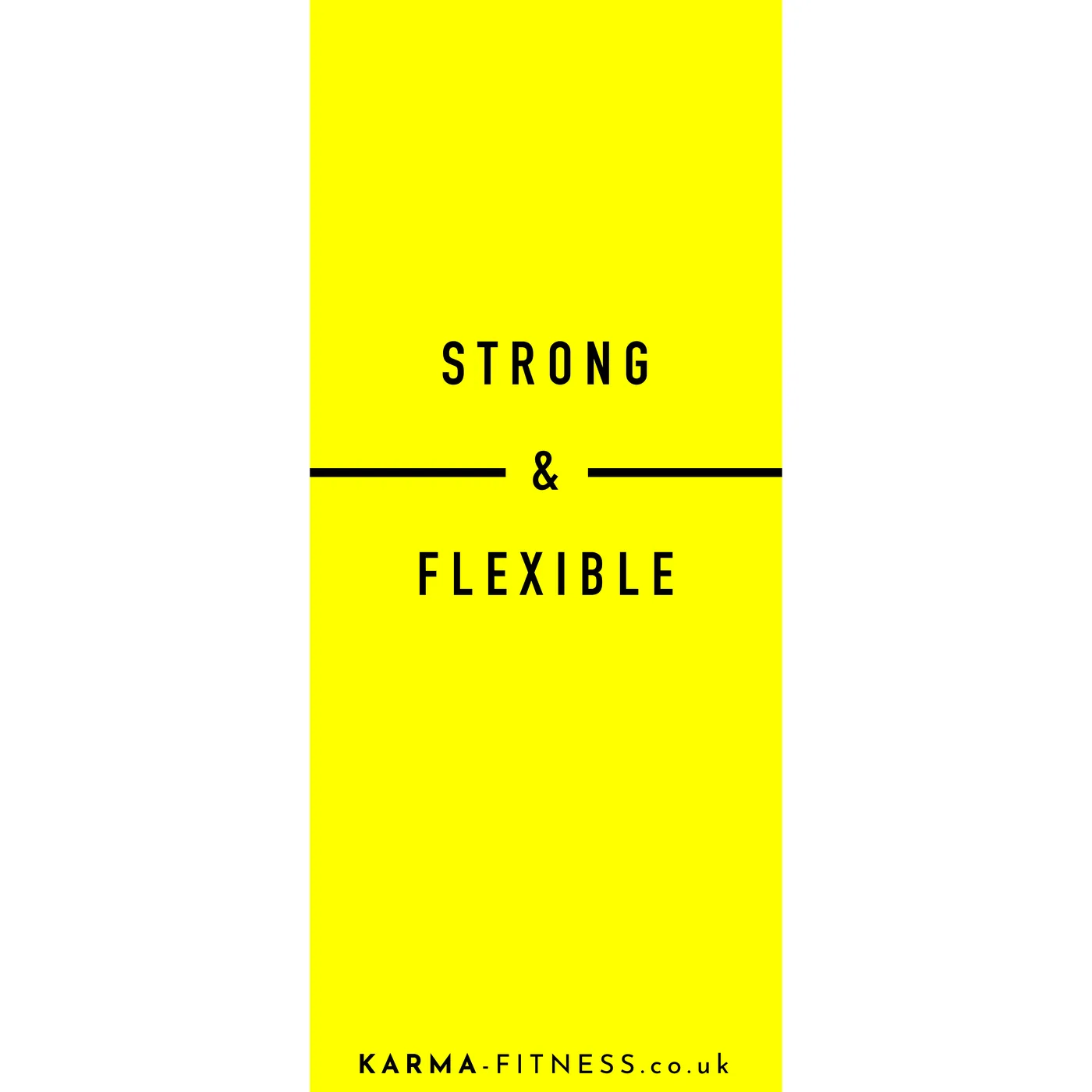
A mat is a rectangle until you lift the corner
Flat on the floor, an exercise mat is the least photogenic object in fitness. It is a coloured oblong.
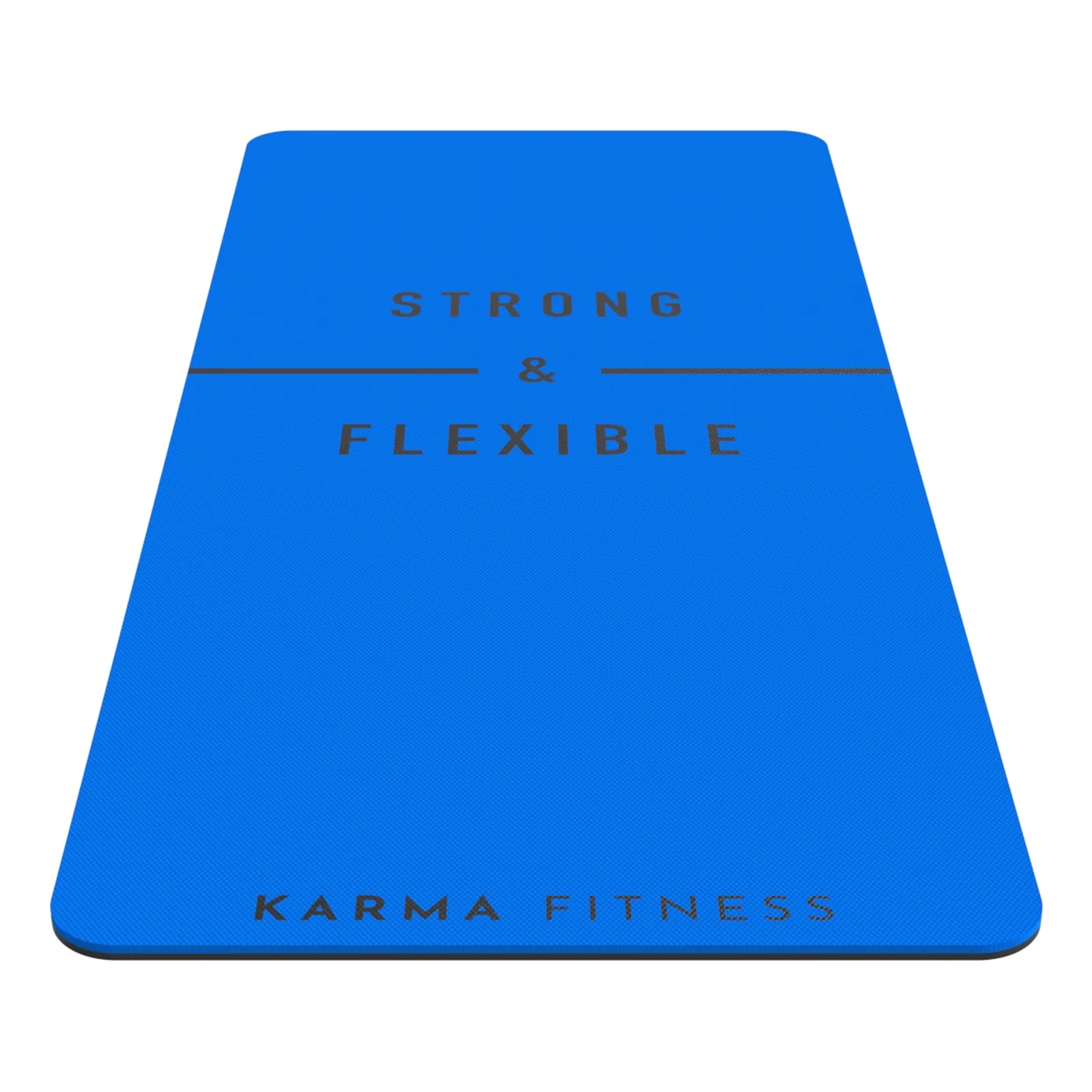
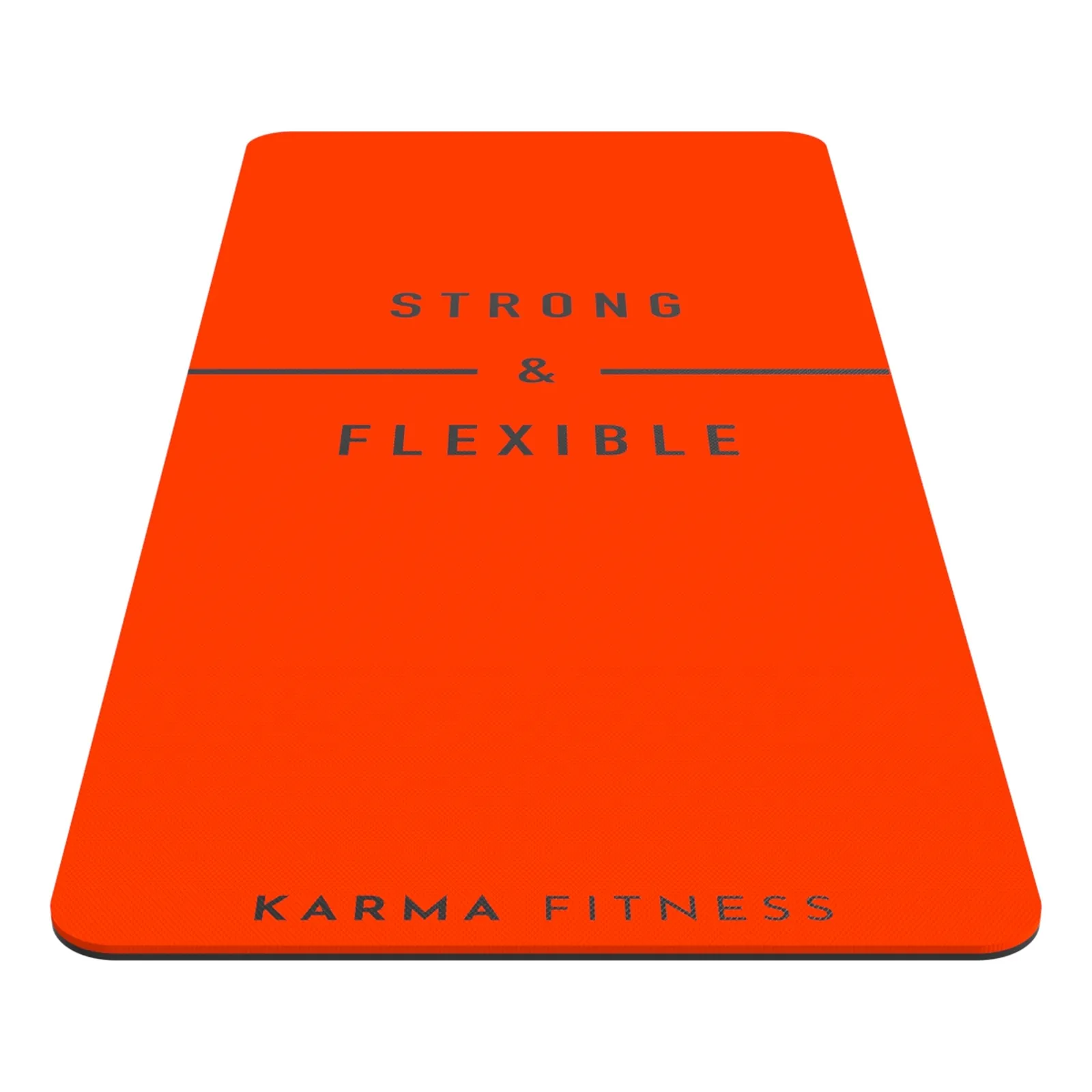
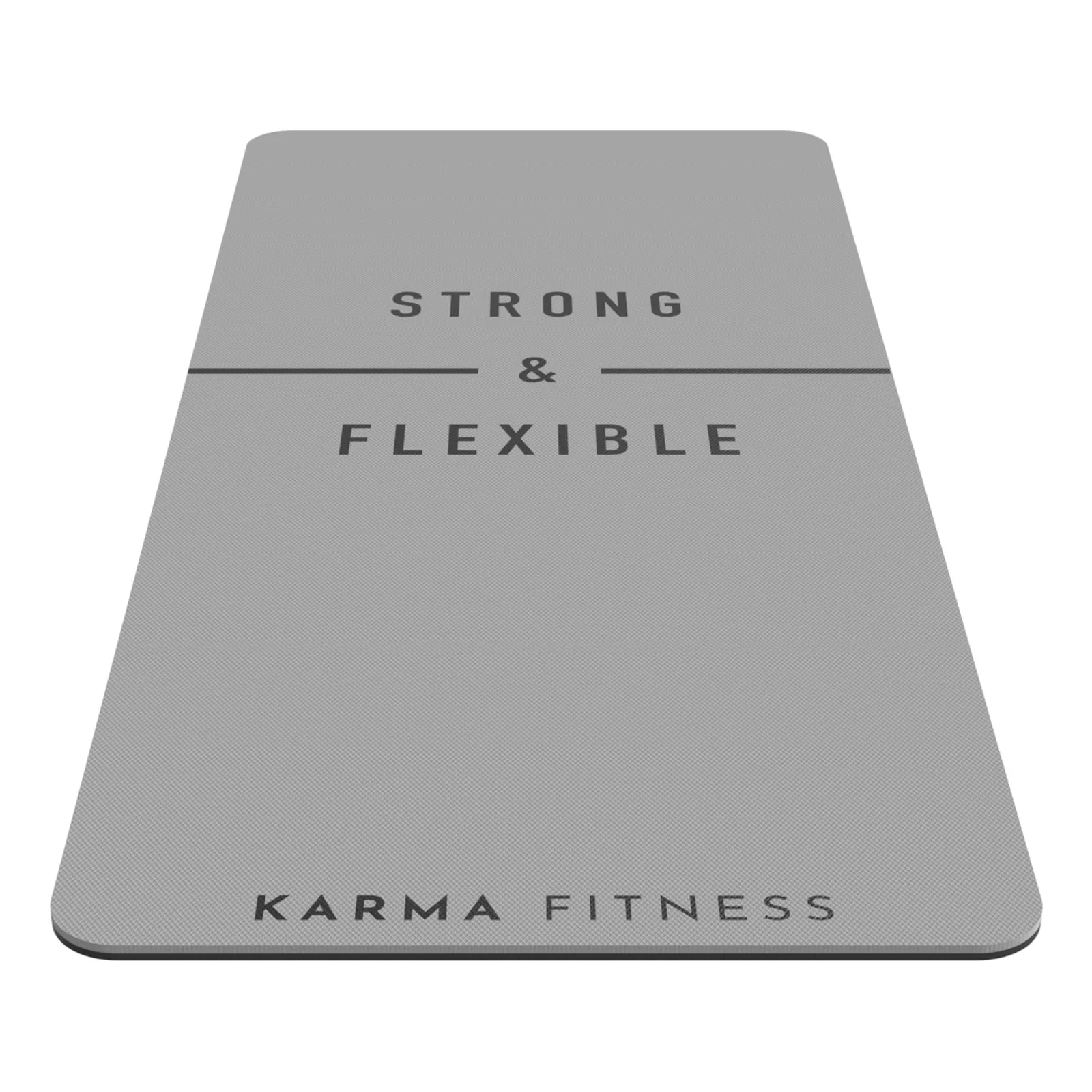
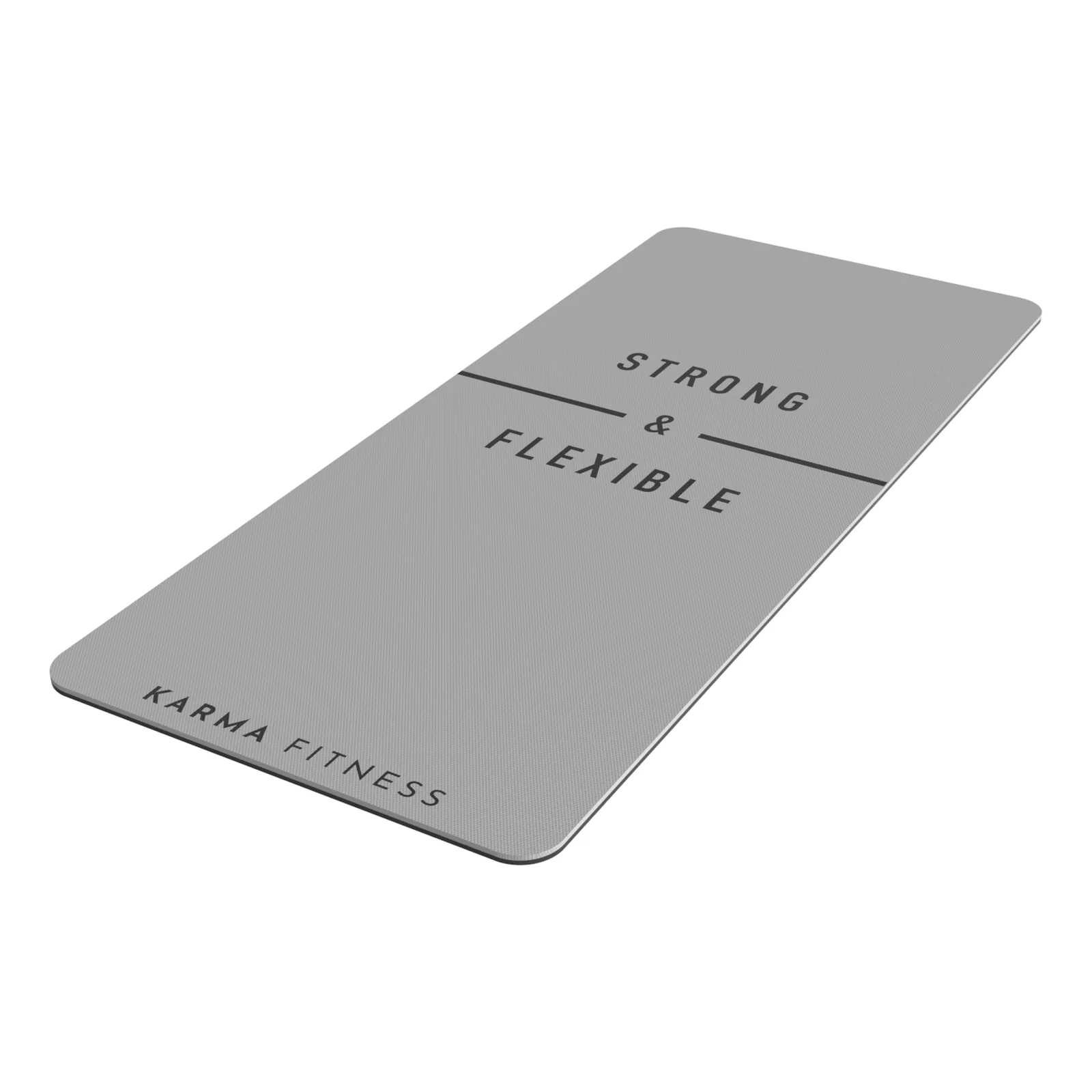
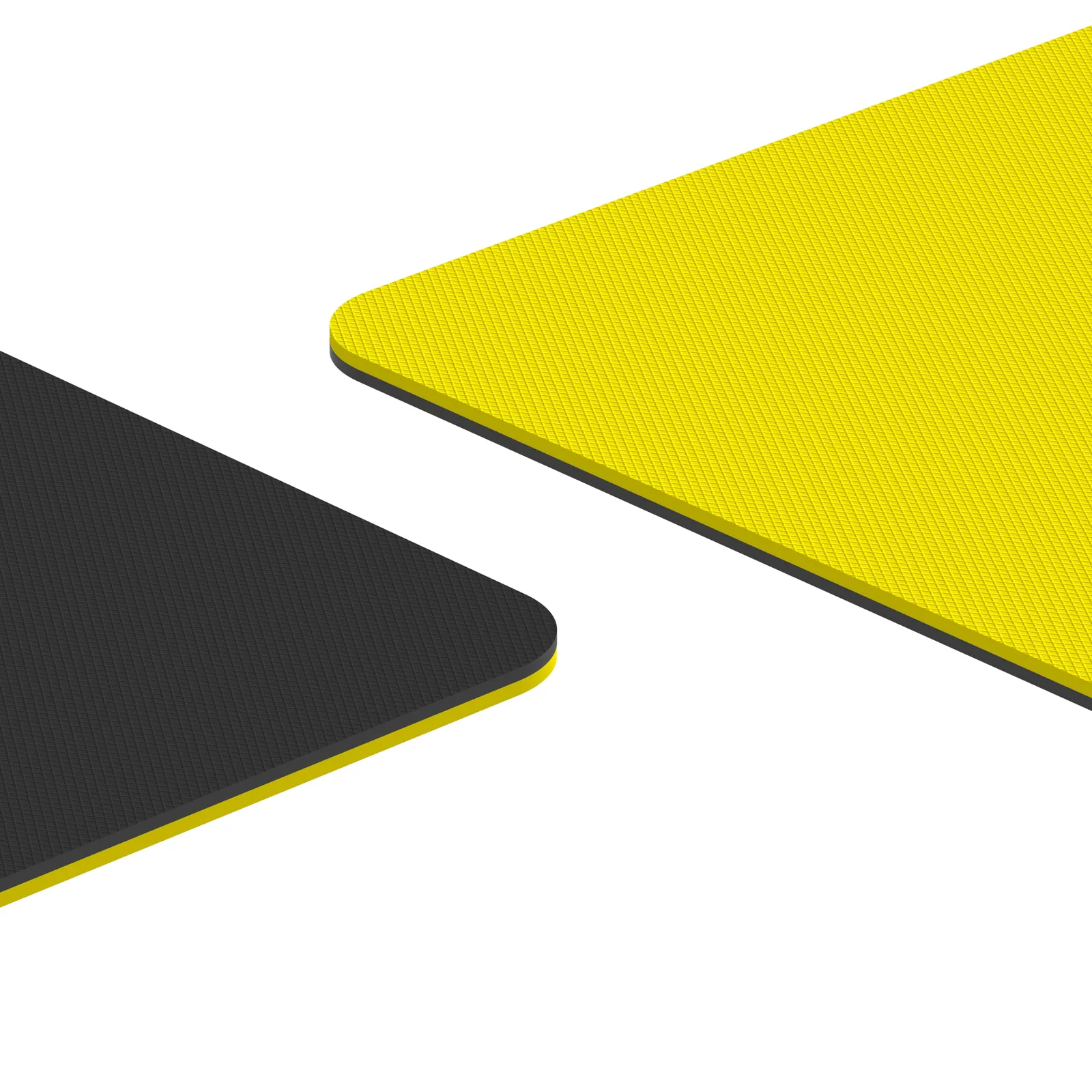
Lifting one corner does three jobs in a single frame. It shows the thickness, which is most of what a buyer is paying for on an extra thick mat. It reveals the black underside, so the two layer build reads without needing a second image. And it puts a bend in the product, which is the word already printed on the front.
That last part is the reason this is the hero shot rather than a flat top down view. The mat says FLEXIBLE across the middle of it. An image where the mat is dead flat asks the buyer to take that on trust. An image where the corner has curled over does not.
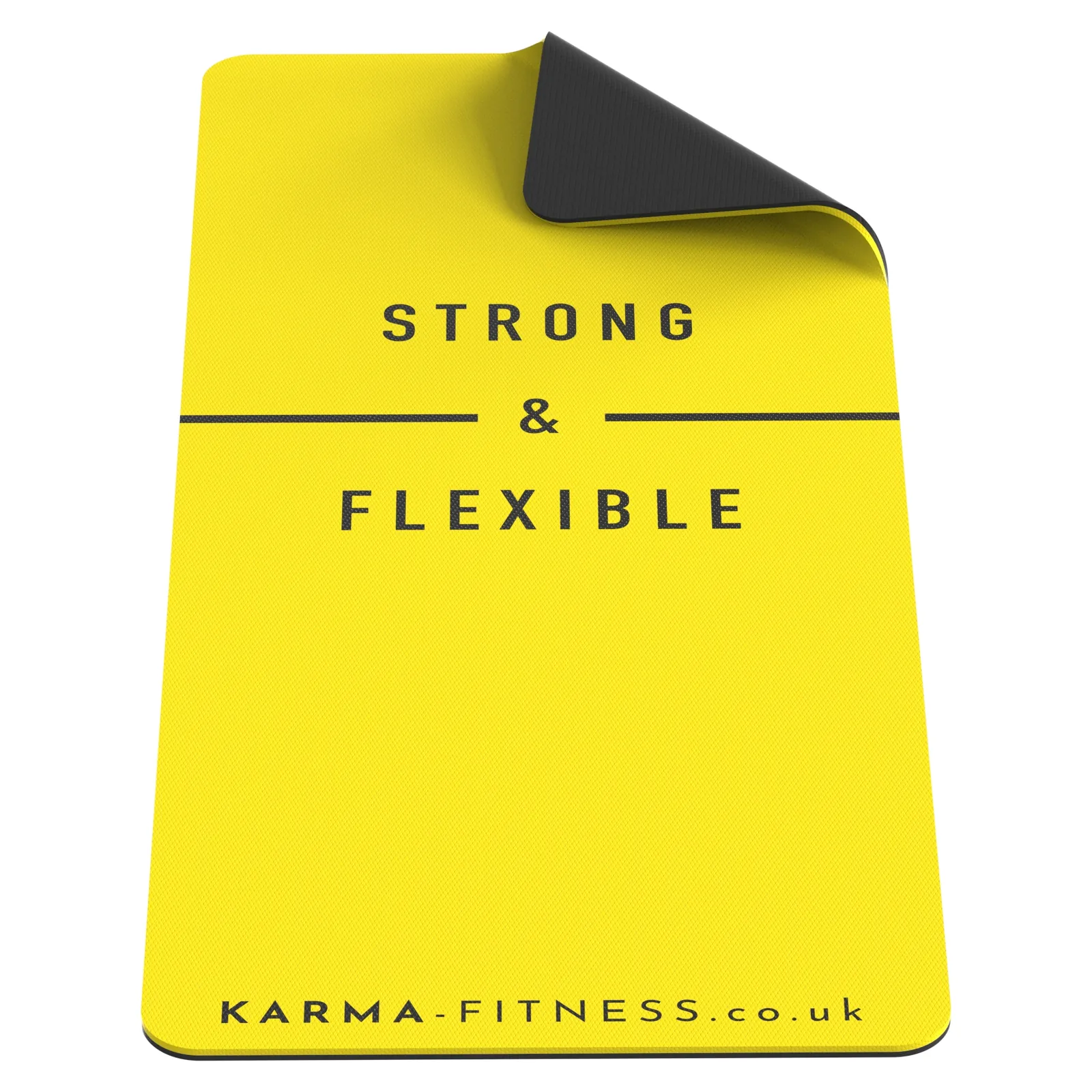
Colour is the product
Karma sell the same mat in a range of colours. That is the whole variant structure of the listing.
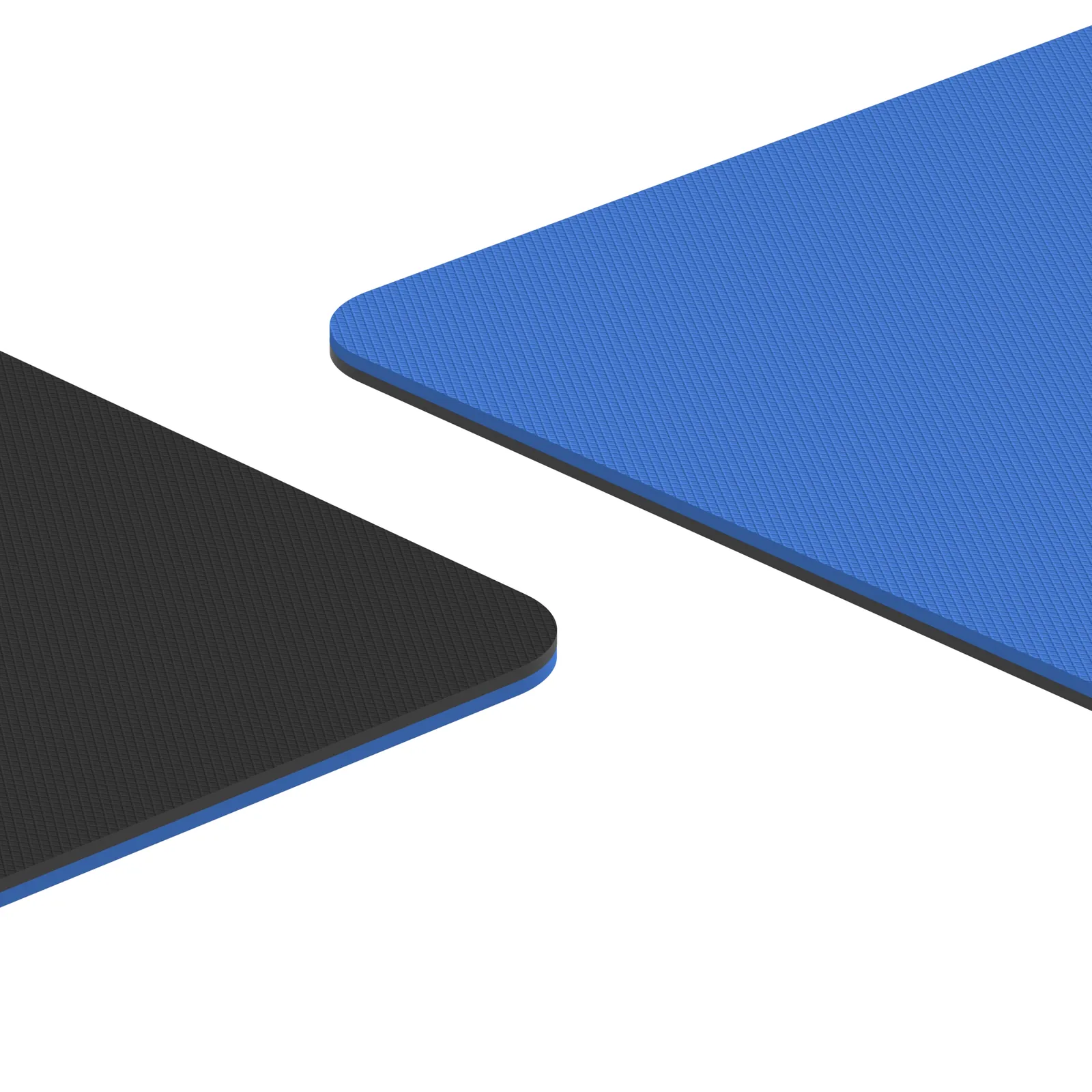
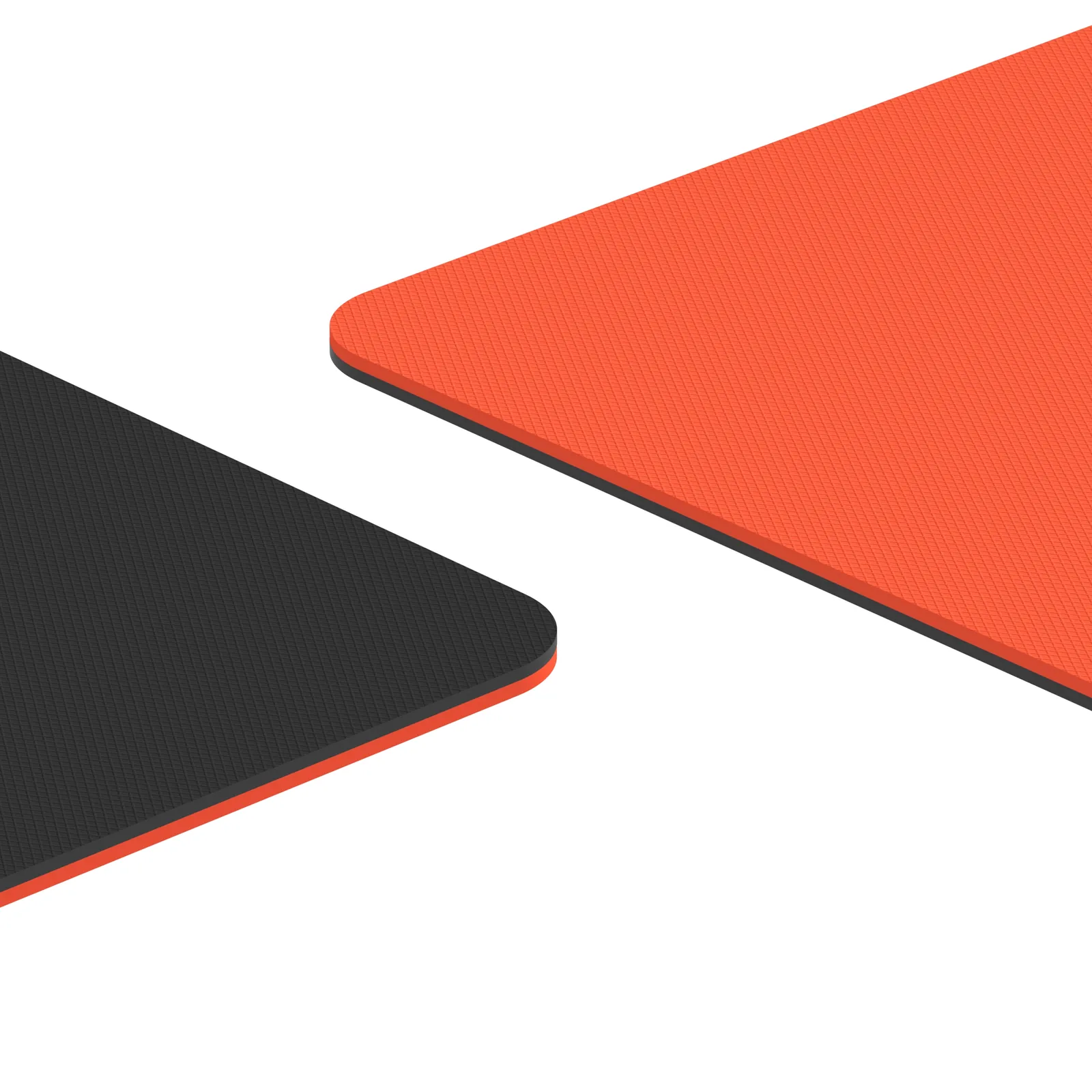
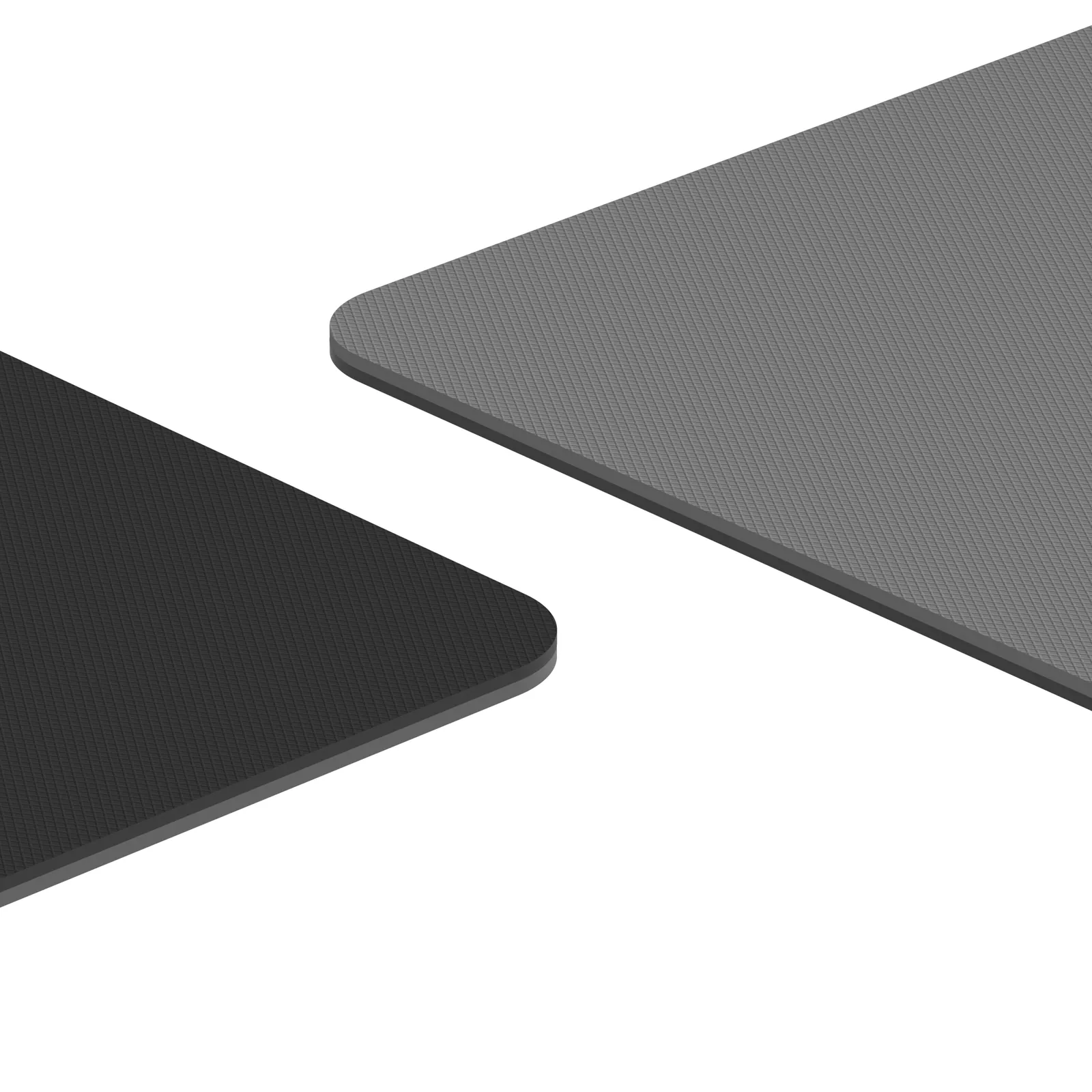
When a catalogue is one product in several colours, the images are not illustrations of the range, they are the range. Every colour needs its own shot, at the same angle, under the same light, or the grid on the collection page looks assembled from different sources.
Modelled once, a new colour is a material change and a re-render. Photographed, it is a fresh sample of every colour, shipped, unrolled, flattened, shot and colour matched to the others. The renders are also why an unlaunched colour can be seen before anyone commits to a production run of it.
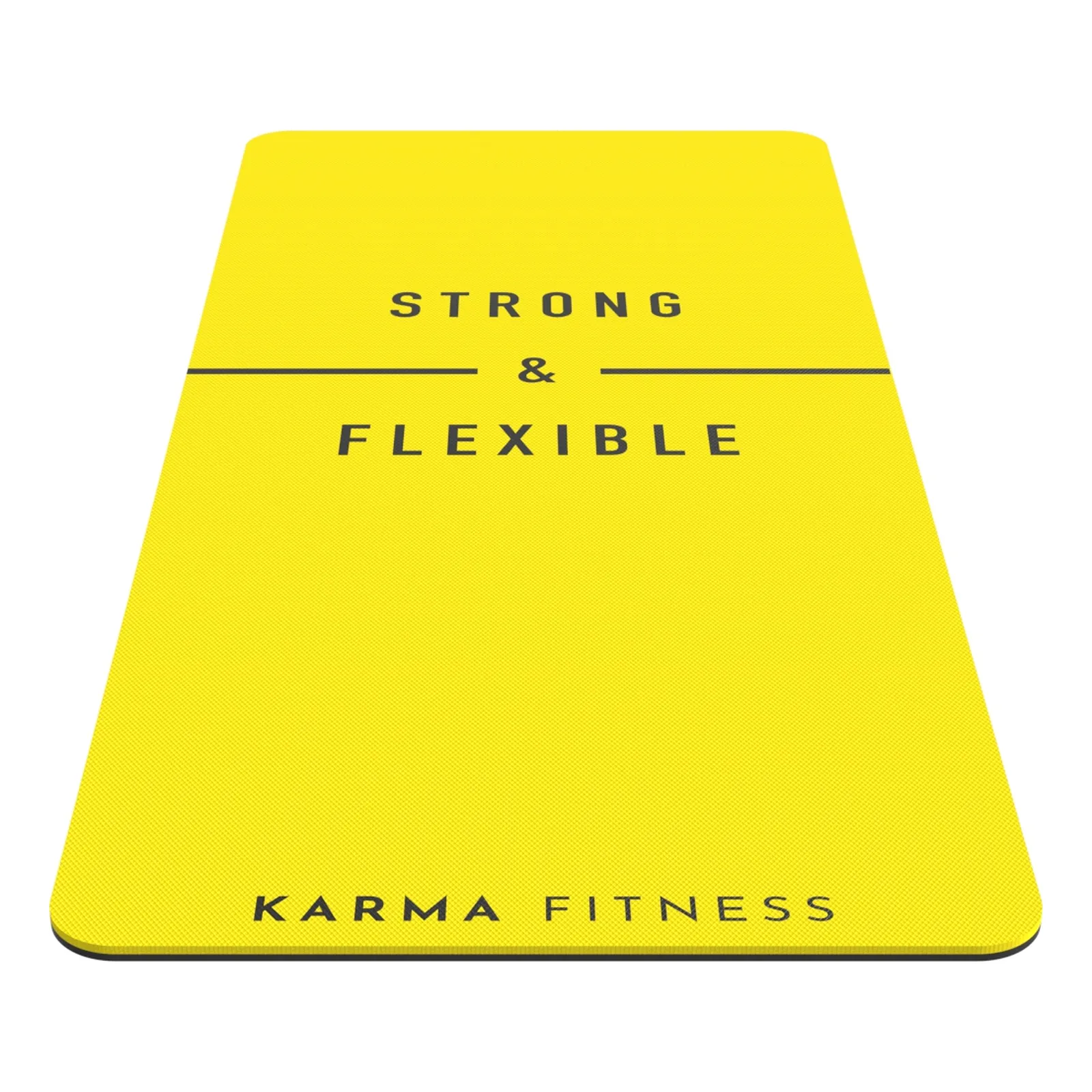



The edge is where the two layers show
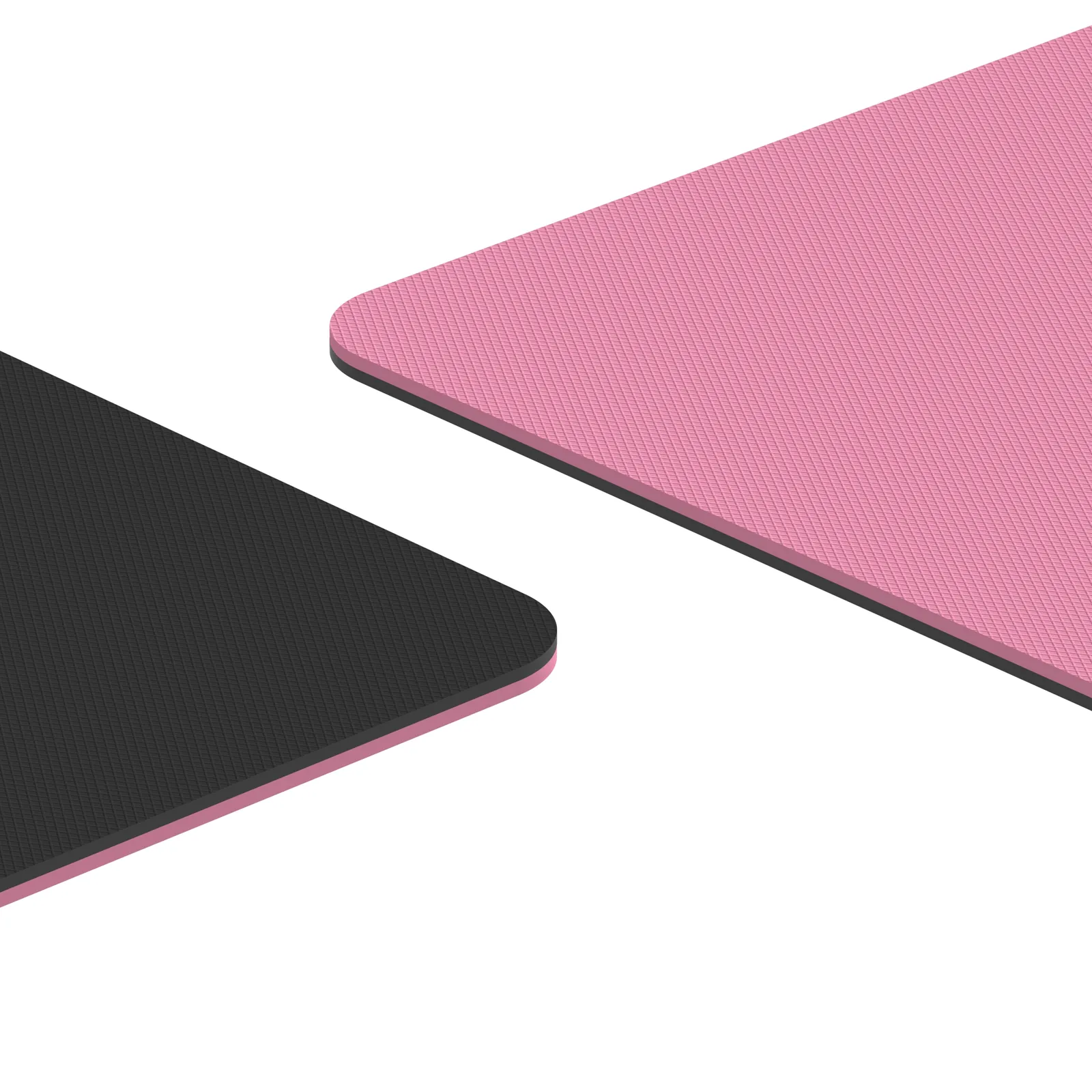
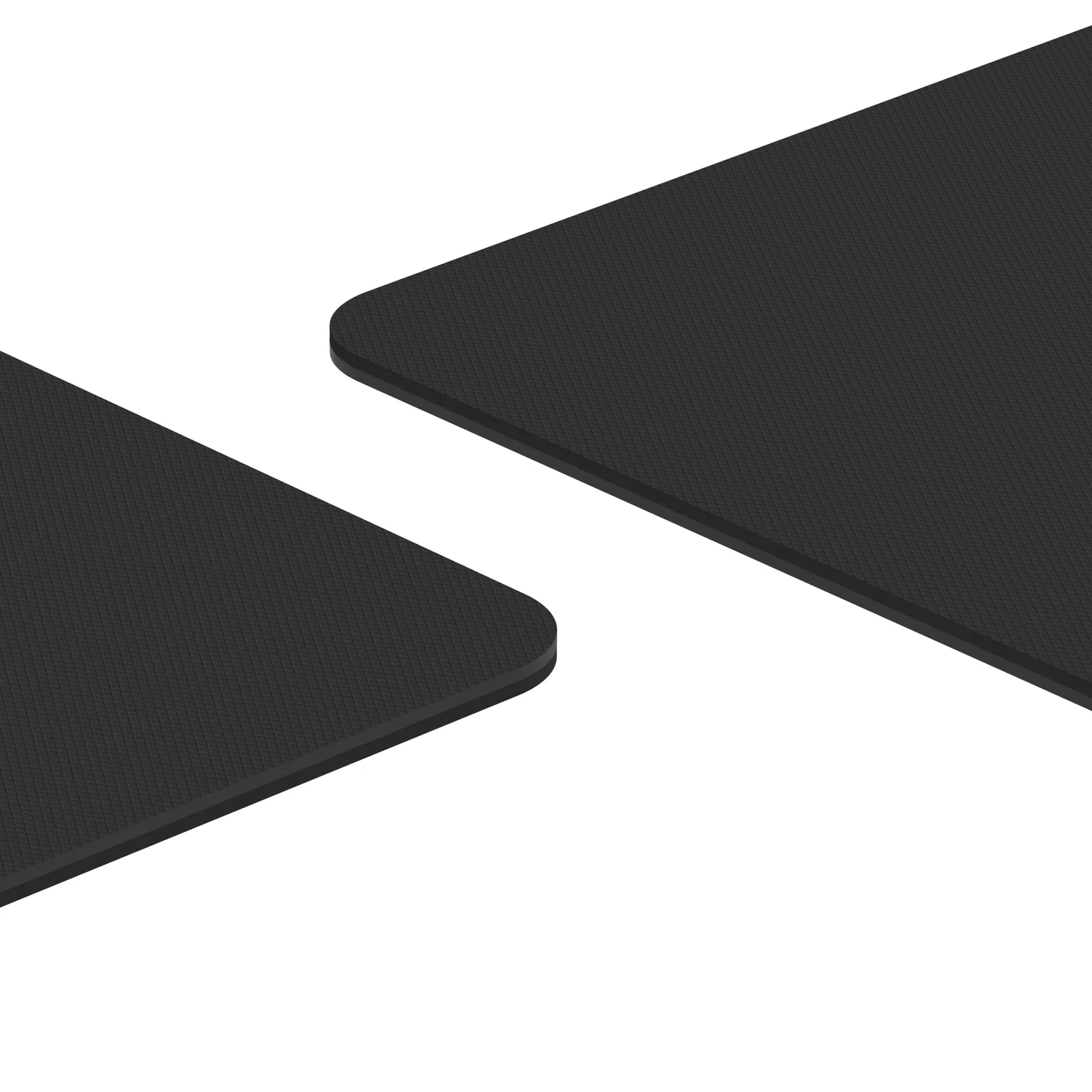
Close in on a corner and the mat stops being a colour and becomes a construction.
The coloured face, the black base and the line where they meet are all visible in the same frame, along with the fine diagonal grip texture running across the surface. Karma sell the mat both printed and plain, so a set of clean unbranded corners covers the variants where the artwork is not on the product at all.
These are also the images that survive being cropped square by a marketplace, used as a background behind text, or scaled down to a swatch. A full mat shot cannot do any of that, because at small sizes it is a coloured rectangle again.
From print file to product
Left, the print file exactly as it arrived. Right, the same artwork on a mat that did not exist yet. Drag to move between them.
From print file to catalogue
Artwork in
One PDF of the printed graphic, flat and at size. No product, no drawing, no sample.
Scale from print
The artwork is laid out for a specific mat, so its proportions set the proportions of the model.
Build the mat
Body, corner radius, thickness and the two layer construction of coloured face over black base.
Surface
The fine diagonal grip texture built across the face so it reads at full size and still holds up in a close crop.
Colourways
One model, several colours, same camera and same light, so the collection page grid stays consistent.
Delivery
Square WebP at matched framing across every colour and every crop.
What was delivered
Selected work
Your product, before it ships
One test render for $130, credited back against your first full project.
Book a test render