A product modelled from a phone video, not a spec sheet
Rolio needed catalogue images for a Bluetooth adapter. What arrived was seventeen seconds of handheld footage of someone turning the antenna on a desk.
- Client
- Rolio BV
- Market
- Netherlands and Germany
- Product
- Bluetooth adapter 5.3, 100 m
- Scope
- Modelling and product renders
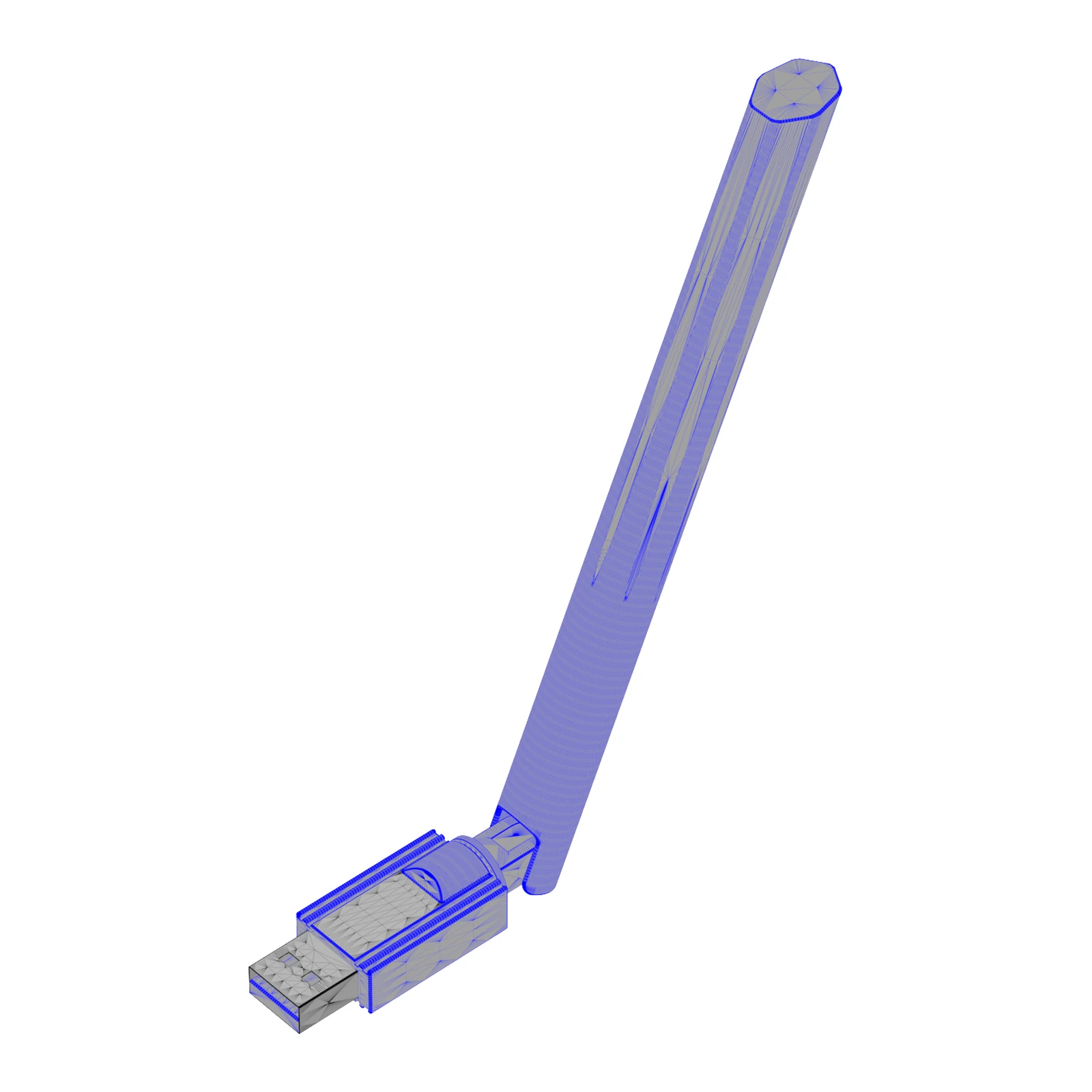
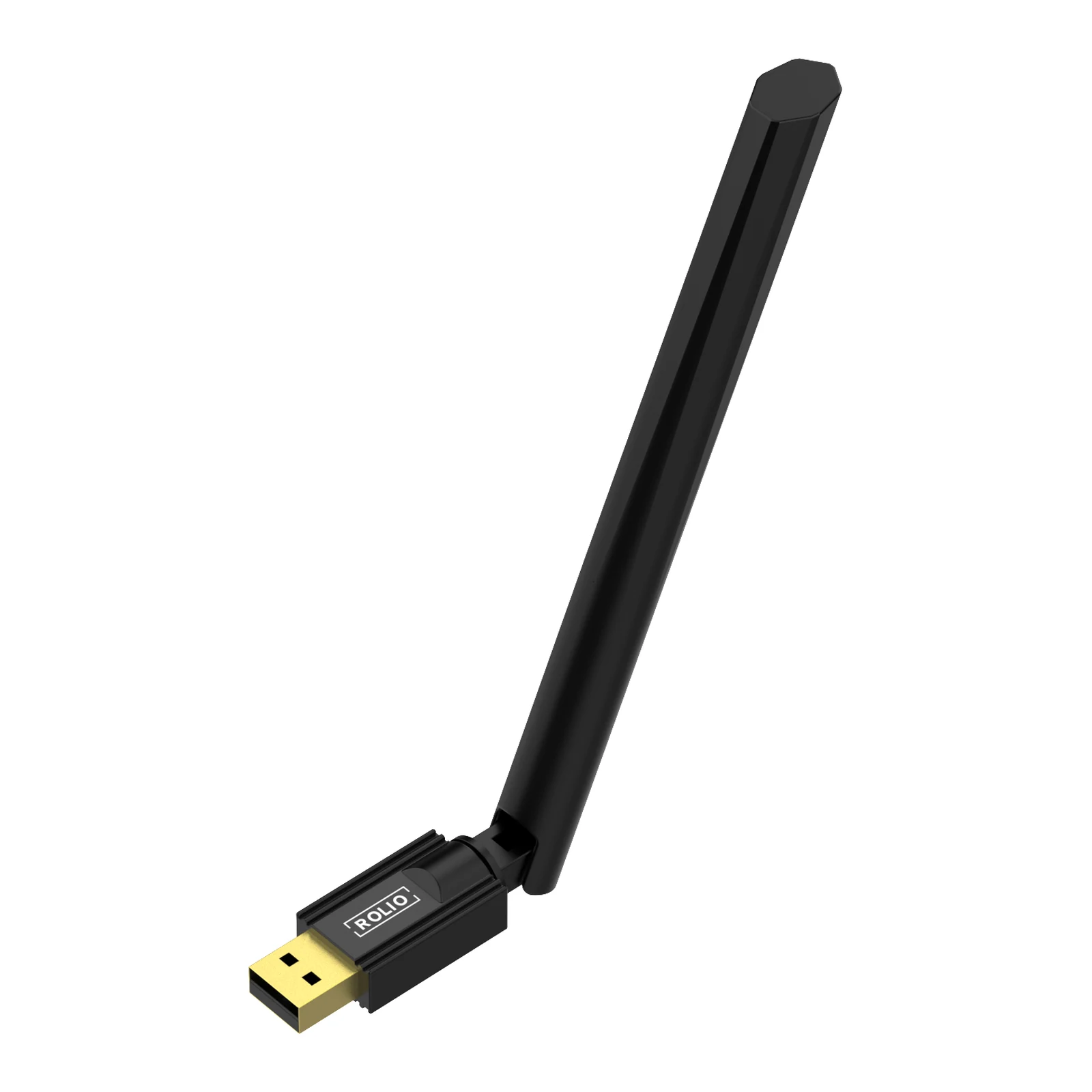 GeometryMaterialsLit
The brief was a phone video shot on a desk
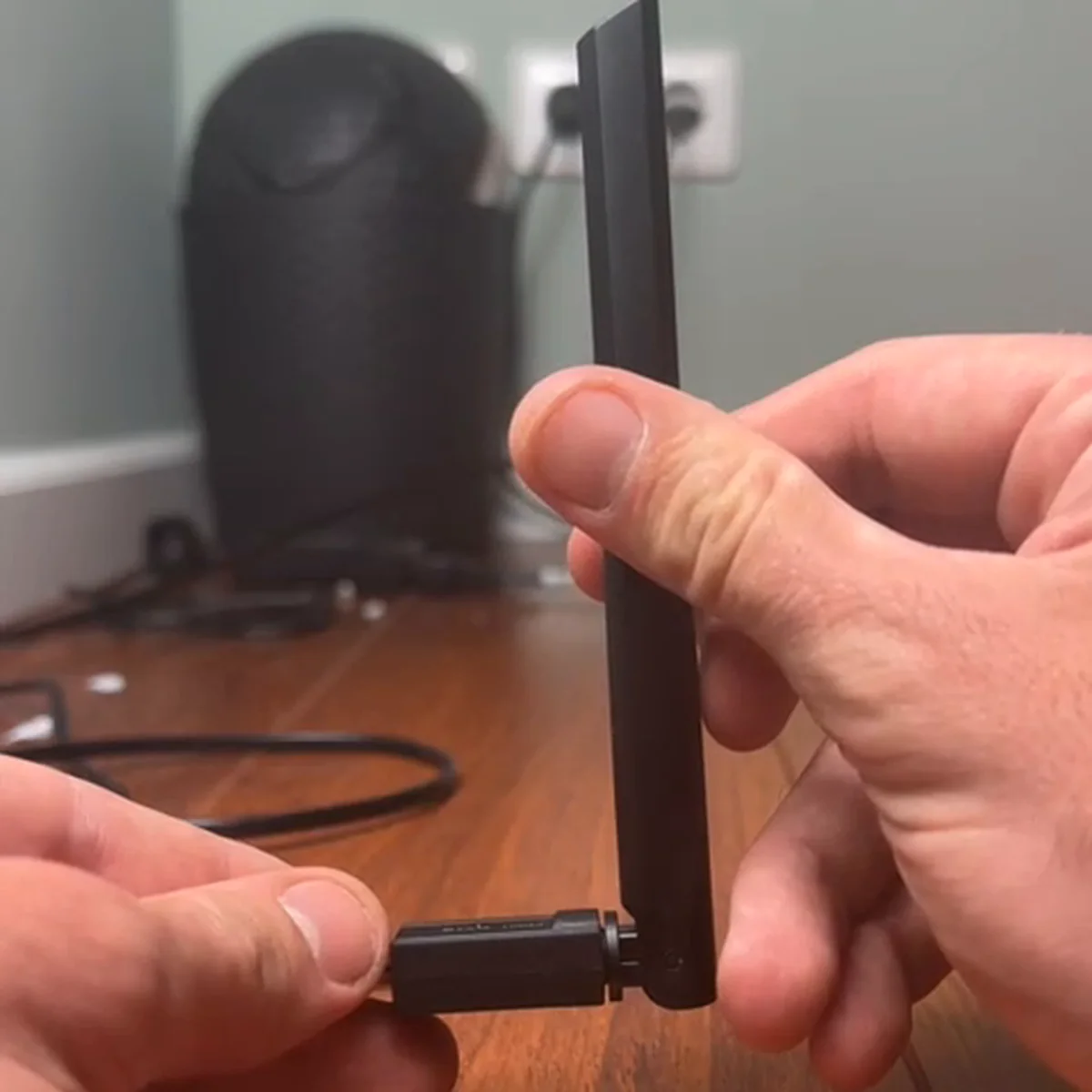
No drawings, no dimensions, no sample in the post. One clip of a hand turning the antenna under a kitchen light.
The footage is exactly what you would expect: a wooden desk, a skirting board, a plug socket and a speaker out of focus behind. The adapter moves in and out of frame while the hinge is worked back and forth. It is useless as a product image and close to perfect as reference, because it shows the one thing a photograph of a static part never does, which is how the hinge moves and where it stops.
Working from footage rather than a sample means reading the part instead of measuring it. Proportions come from the USB-A connector, which is a known size, and everything else scales off it.
Nothing can be lit until it exists as geometry
Before any of this could be rendered it had to be built: body, collar, hinge, antenna and the USB shell.
The model gets made first and checked as plain shaded geometry, with no materials and no lighting to hide behind. At that stage the only things that matter are whether the proportions hold, whether the hinge sits where the video says it sits, and whether the USB-A connector reads as the real thing rather than an approximation.
Shown flat and untextured, mistakes have nowhere to go. A wrong radius or a collar that is one millimetre too deep is obvious in grey plastic and invisible once there is a specular highlight running down the antenna.
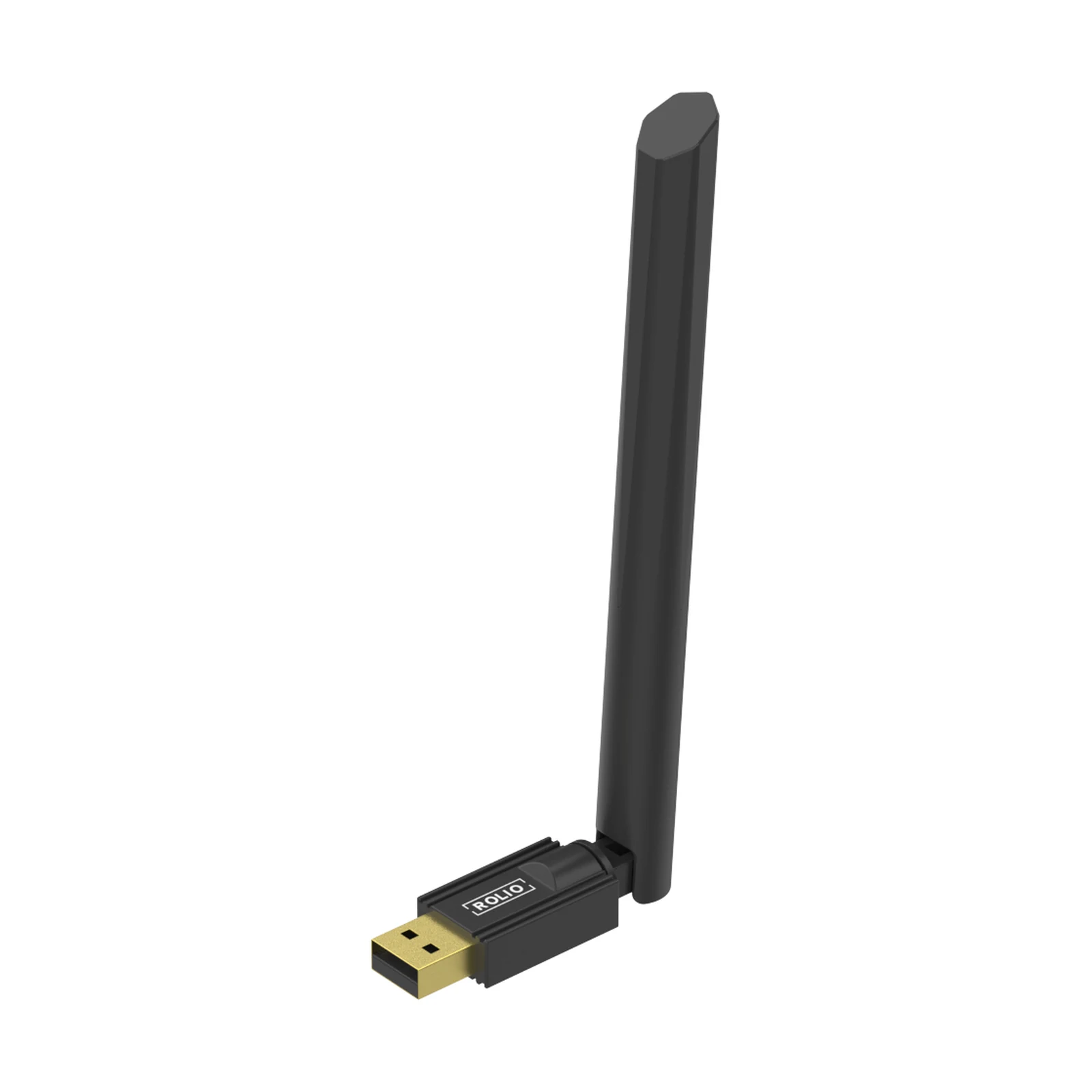
All four images below are the same camera. Surface mesh, wireframe, the model seen through itself, and then the same frame lit and finished. It is also the camera used at the top of this page, which is why the wireframe up there settles onto the product rather than dissolving into a different photograph.


The hinge is the product
Every adapter in this category is a black stick with a USB plug. The thing that differs is how the antenna folds.
A single image of the adapter lying flat tells a buyer nothing they cannot get from a competitor listing. The same model posed at three antenna positions tells them the joint articulates, roughly how far, and what it looks like plugged into the side of a laptop rather than sitting in a box.
This is the argument for building it in 3D rather than photographing it. Once the hinge is rigged, a new position costs a re-render. Photographing it means holding the antenna at a repeatable angle across a whole set, by hand, without the fingers showing.
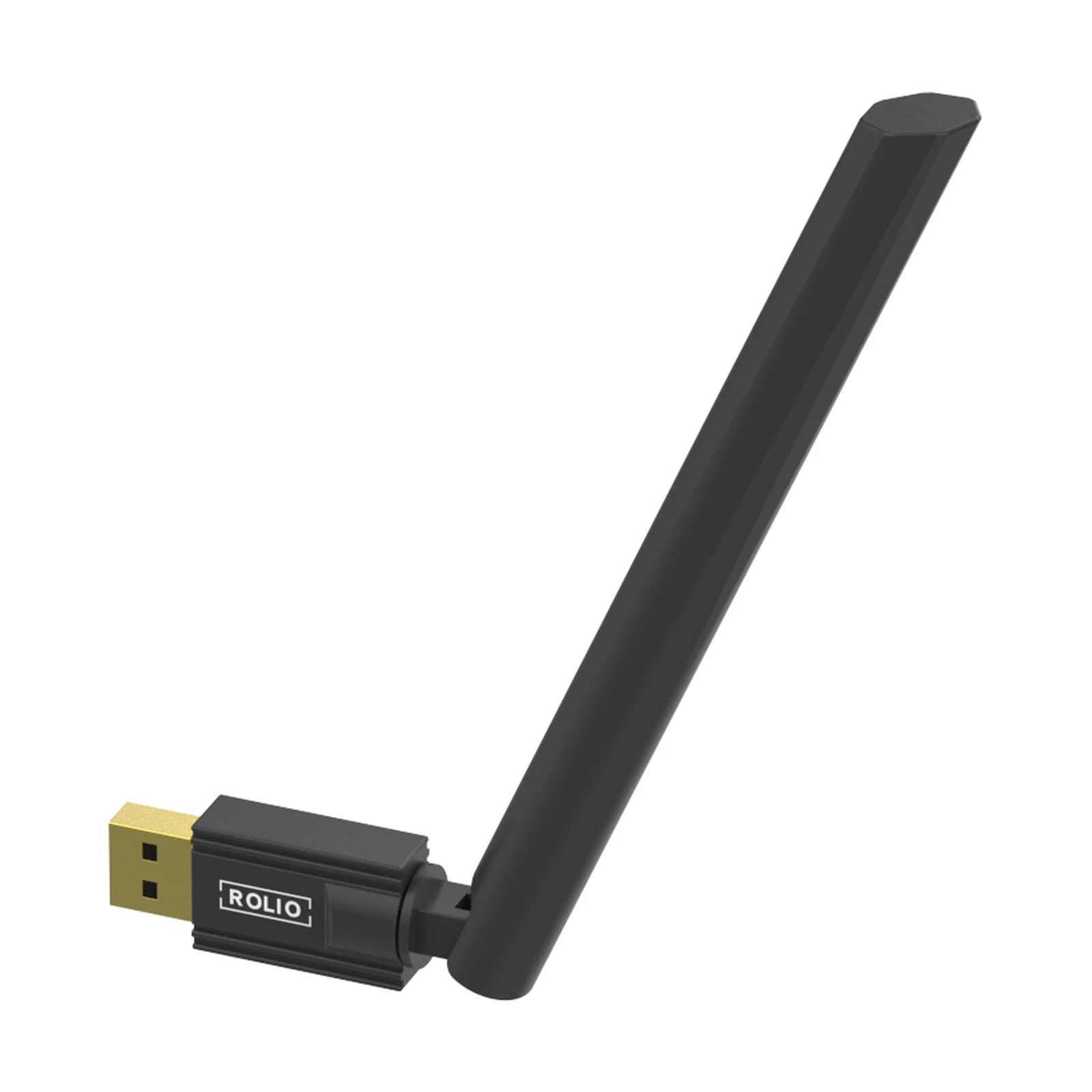
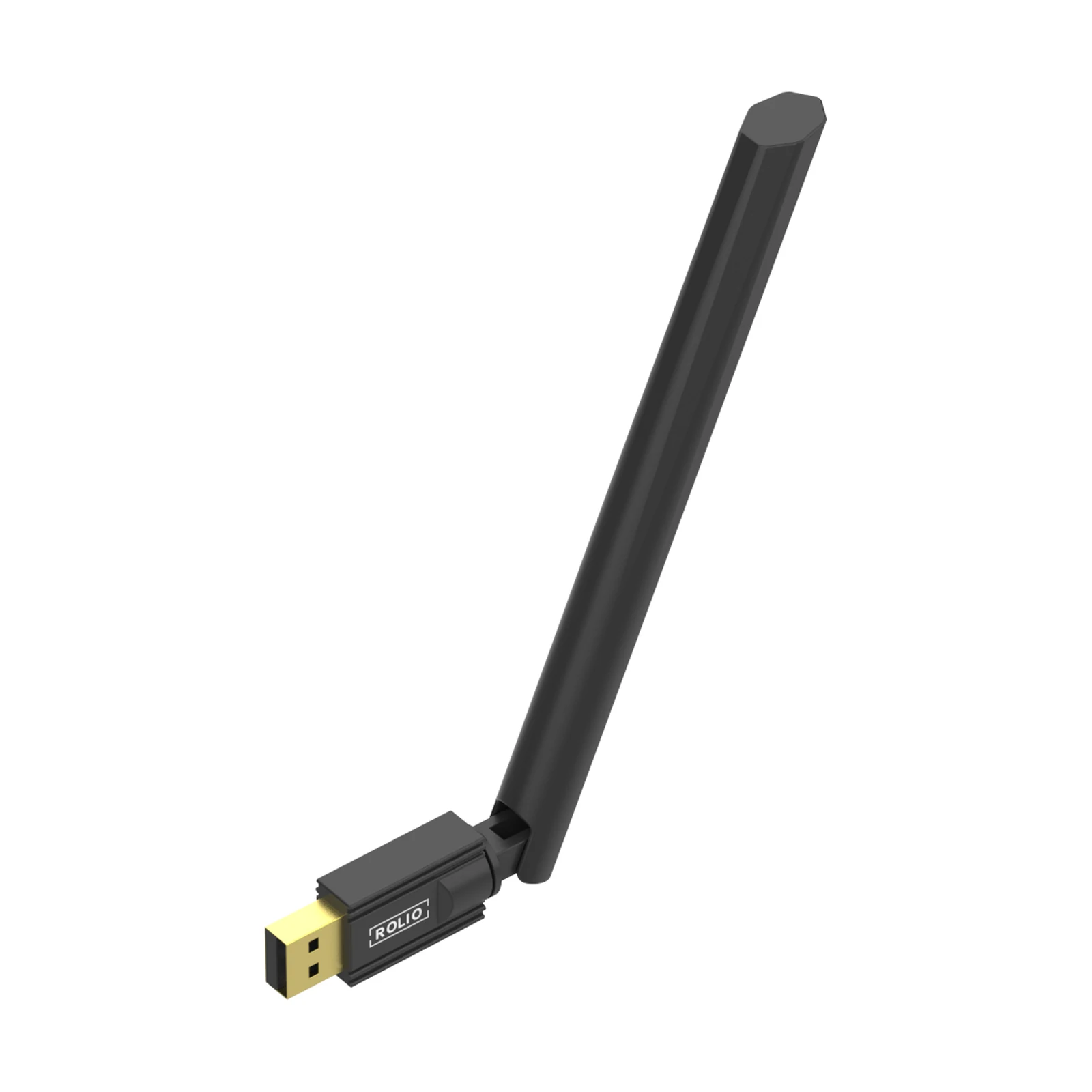
Matte black plastic on a white background
The hardest thing to photograph cheaply is a black object that has to stay black and still show its edges.
The body is moulded ABS with a fine texture, the collar is knurled, and the USB contacts are gold plated. On a white sweep a camera either loses the black form into a silhouette or lifts it until the plastic reads grey. The gold then goes flat or blows out entirely.
Rendered, the black keeps its value while the edge highlight still separates the body from the ground, and the contacts stay gold rather than turning yellow. The catalogue needs the shot to sit on white next to every other product in the range, which is a constraint the lighting has to meet rather than work around.
From phone video to product
Left, a frame from the handheld clip. Right, the same antenna position rebuilt and lit. Drag to move between them.
From clip to catalogue
Reference in
A seventeen second handheld video of the physical adapter, filmed on a desk. Everything else is read off it.
Scale anchor
Proportions taken from the USB-A connector, which is a fixed known size, with the rest of the part scaled against it.
Model
Body, knurled collar, hinge, antenna and USB shell built and checked as untextured geometry before anything is lit.
Materials
Textured ABS on the body, a finer finish on the antenna, gold plating on the contacts, matched to what the footage shows.
Positions
The hinge posed at several angles from the one model, so the articulation reads across the set.
Delivery
Transparent PNG masters plus flattened versions, so the same render drops onto white, onto a coloured banner or into an A+ module.
What was delivered
Selected work



Your product, before it ships
One test render for $130, credited back against your first full project.
Book a test render