A catalogue of products that are, by design, invisible
Protectorking sells screen protection for hundreds of devices. Every product is a transparent sheet of glass, and none of them can be usefully photographed.
- Client
- Protectorking
- Market
- Germany
- Relationship
- Since 2023
- Scope
- Renders, packaging, print
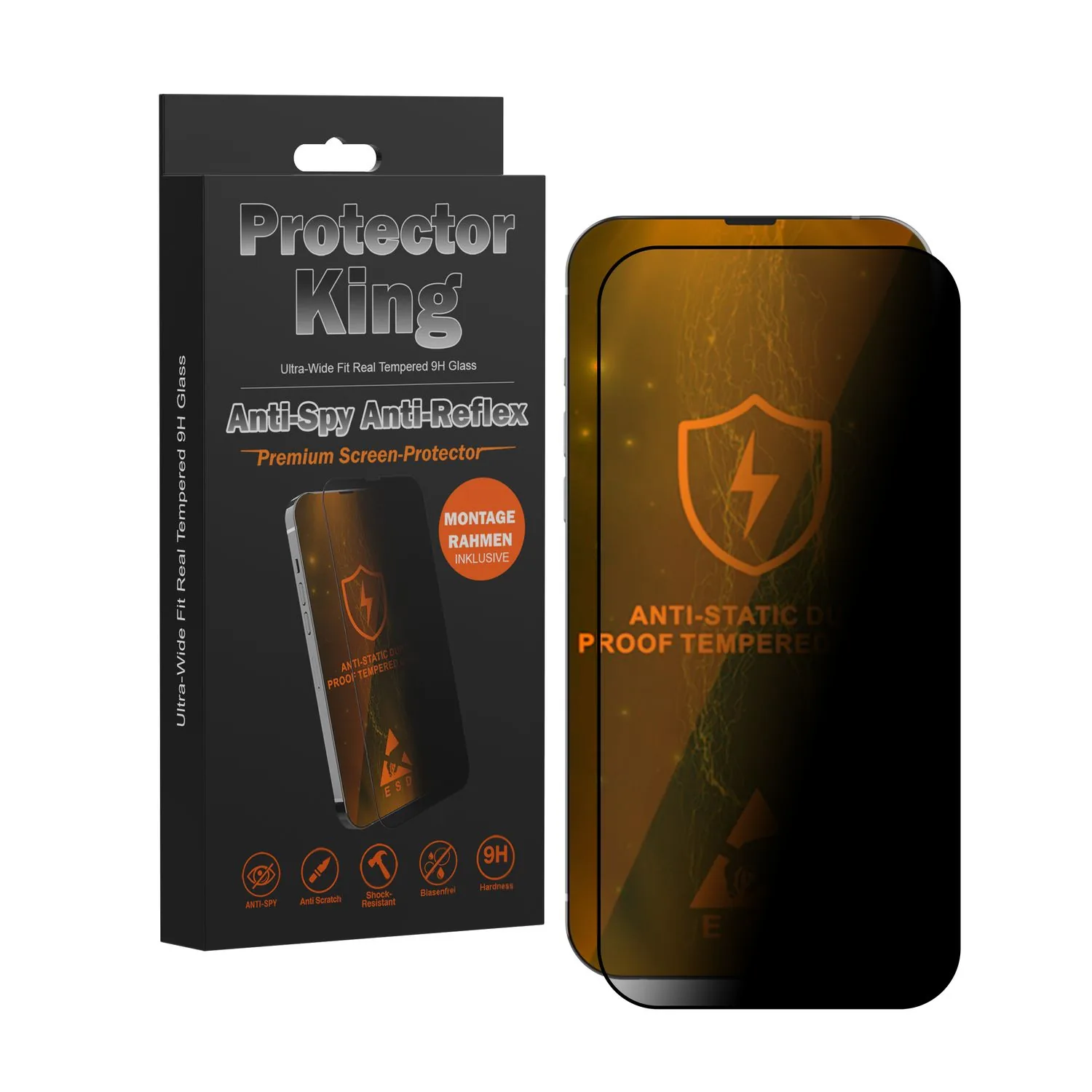
Three products that look identical, priced four times apart
Clear, privacy and anti-reflex glass are the same transparent rectangle to a camera. On the shelf they are separated by nearly twenty euros.
The coating, the blackout angle, the rounded edge, every feature the price is built on is either transparent or microscopic. Rendered from one scene, each becomes something a buyer can actually see.


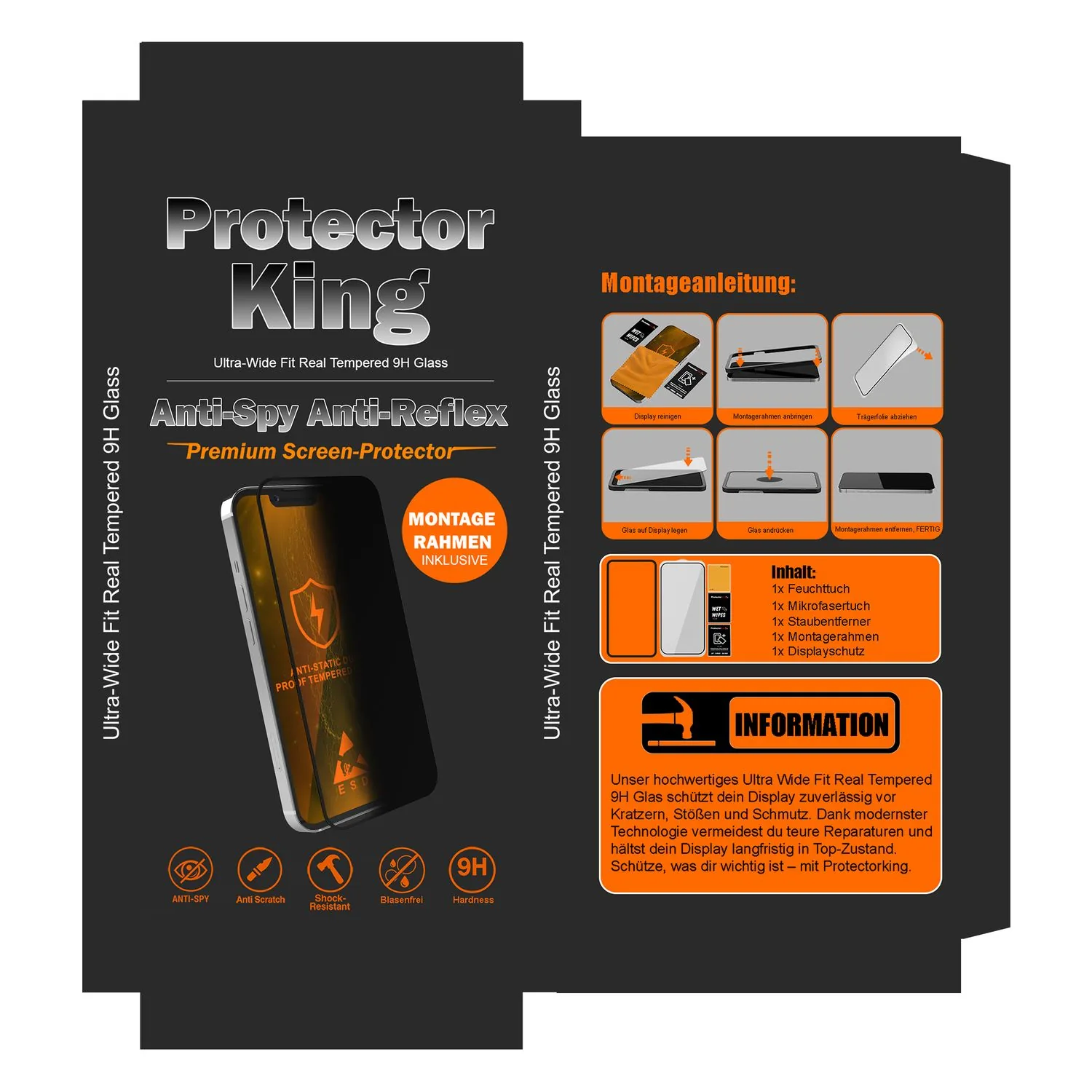
Six steps, printed on the back of every box
Fitting tempered glass is where customers fail and refunds start. The Montageanleitung is rendered step by step, in German, on the reverse of every carton.
Zoom in and the whole sequence is legible: clean the display, close the box, remove dust, activate, peel the carrier film, smooth the bubbles away. Each panel is a separate render, laid out on the dieline before it went to press.

The packaging is part of the product
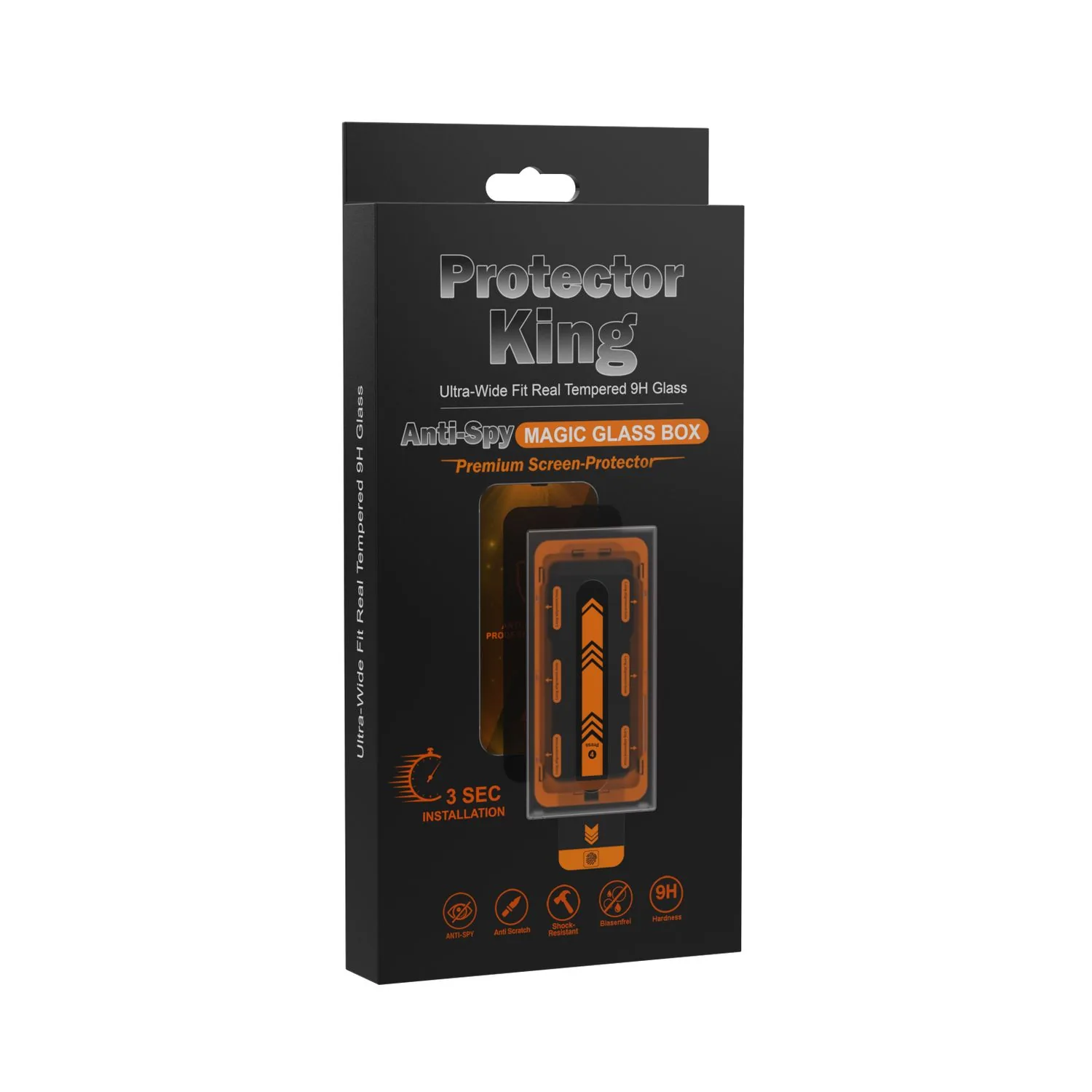
Carton front, carton back and the flat dieline that goes to press, all built from the same models.
Artwork is checked on the real carton form before any print run is committed, so seam position, legibility and finish are resolved on screen rather than discovered on a pallet.


Every claim needs a picture that proves it
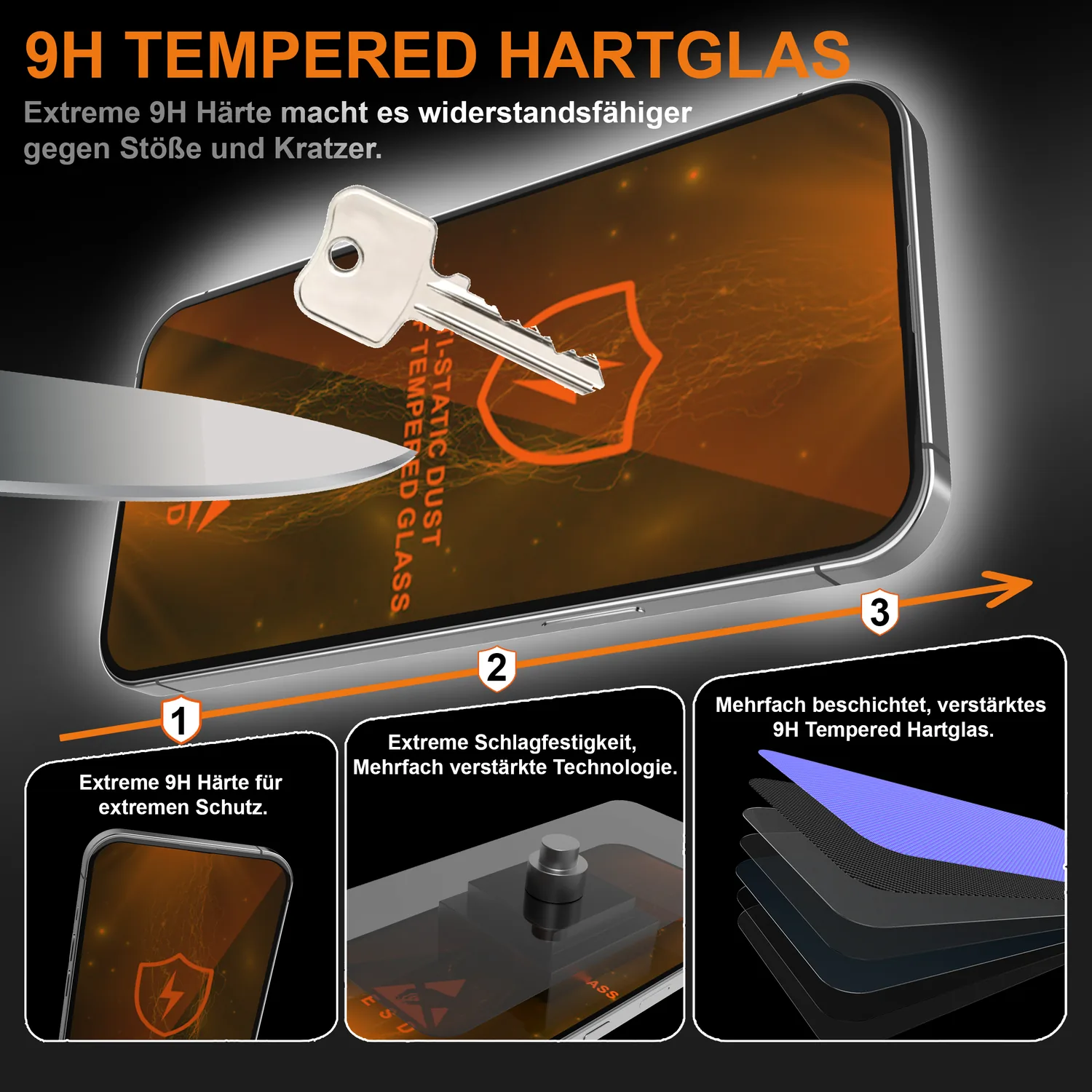
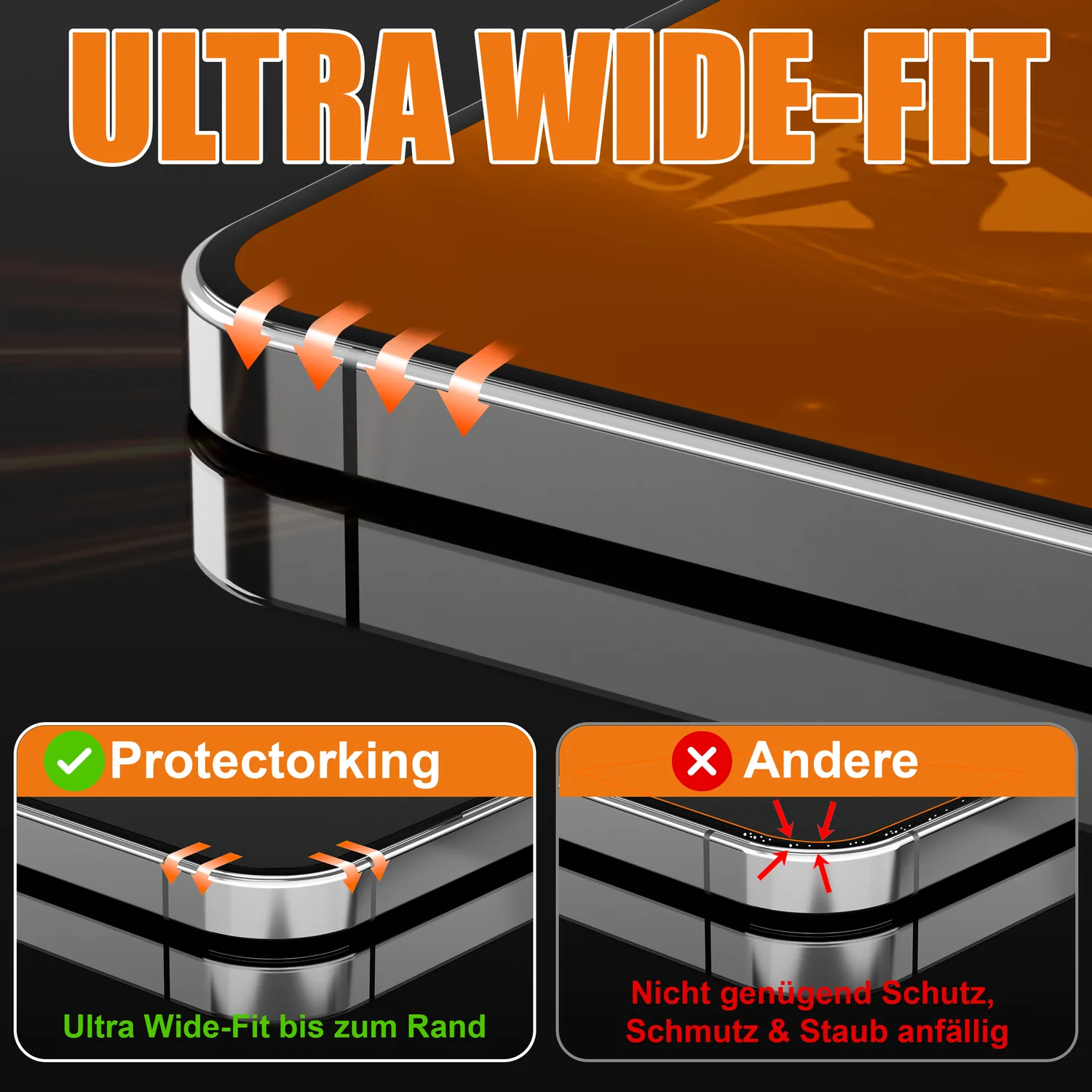
German listing pages carry a full A+ set. Each module has to demonstrate one property, not assert it.
Oleophobic coating shown as beading droplets. Edge coverage shown against a competitor corner. Privacy shown at the exact viewing angle it cuts out. 9H hardness shown against a key and a blade. All rendered from the same models as the packaging.





One design language, every product line
The same system extends from phone glass to the gaming handheld range, in clear, privacy, anti-reflex and gaming variants.
Because the cartons, the glass and the applicator all exist as models, a new product line is an artwork change rather than a new photoshoot. That is what keeps a catalogue this wide looking like one brand.


A device nobody has held, shown in use
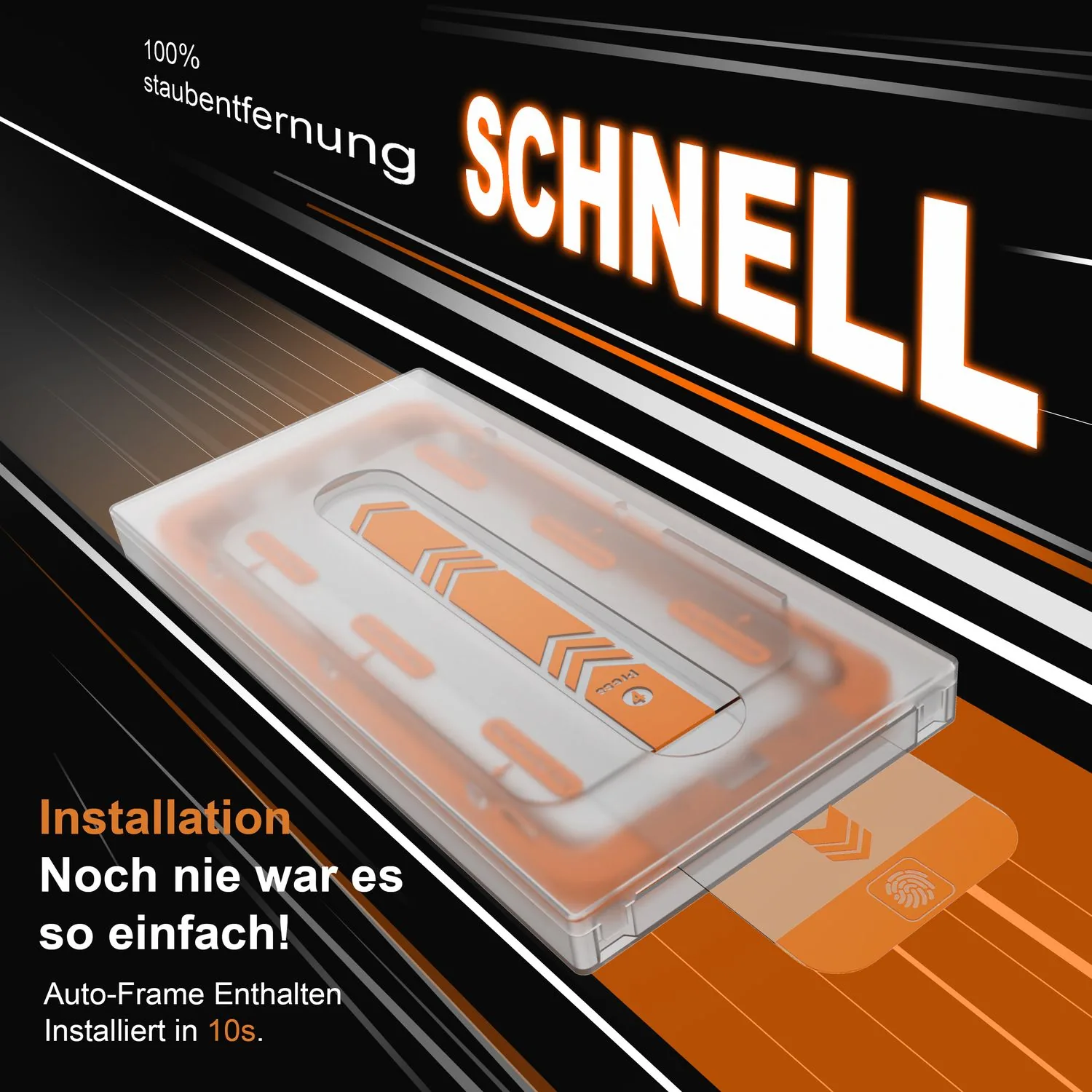
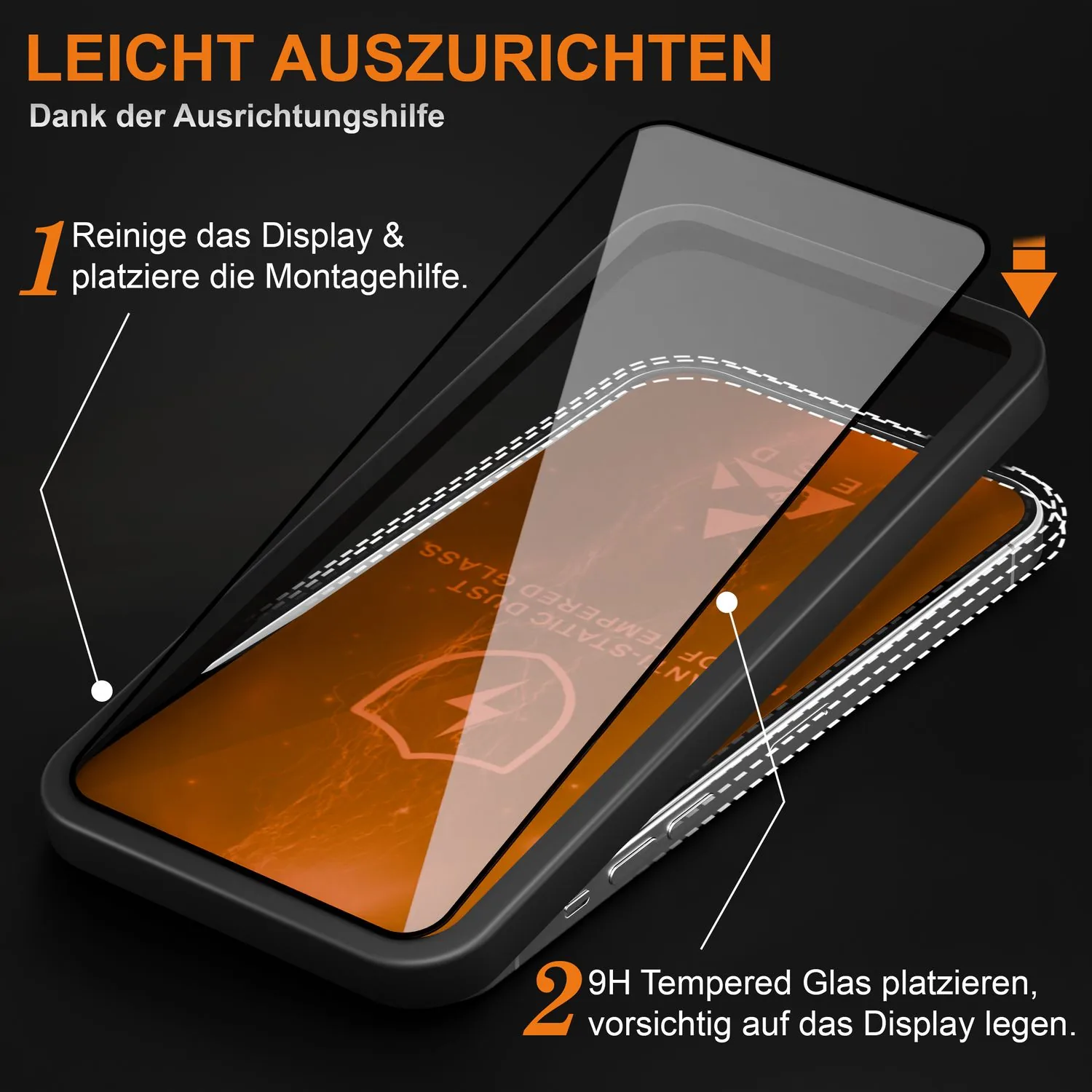
The Magic Box applicator is the reason a customer can fit glass in three seconds. Showing how it works is the whole sell.
Each stage is rendered rather than photographed, so the wipe, the frame, the press and the pull tab appear at the exact angle that makes the movement obvious. Photographing a transparent applicator in a hand, four times, consistently, is not realistic.


Delivered render
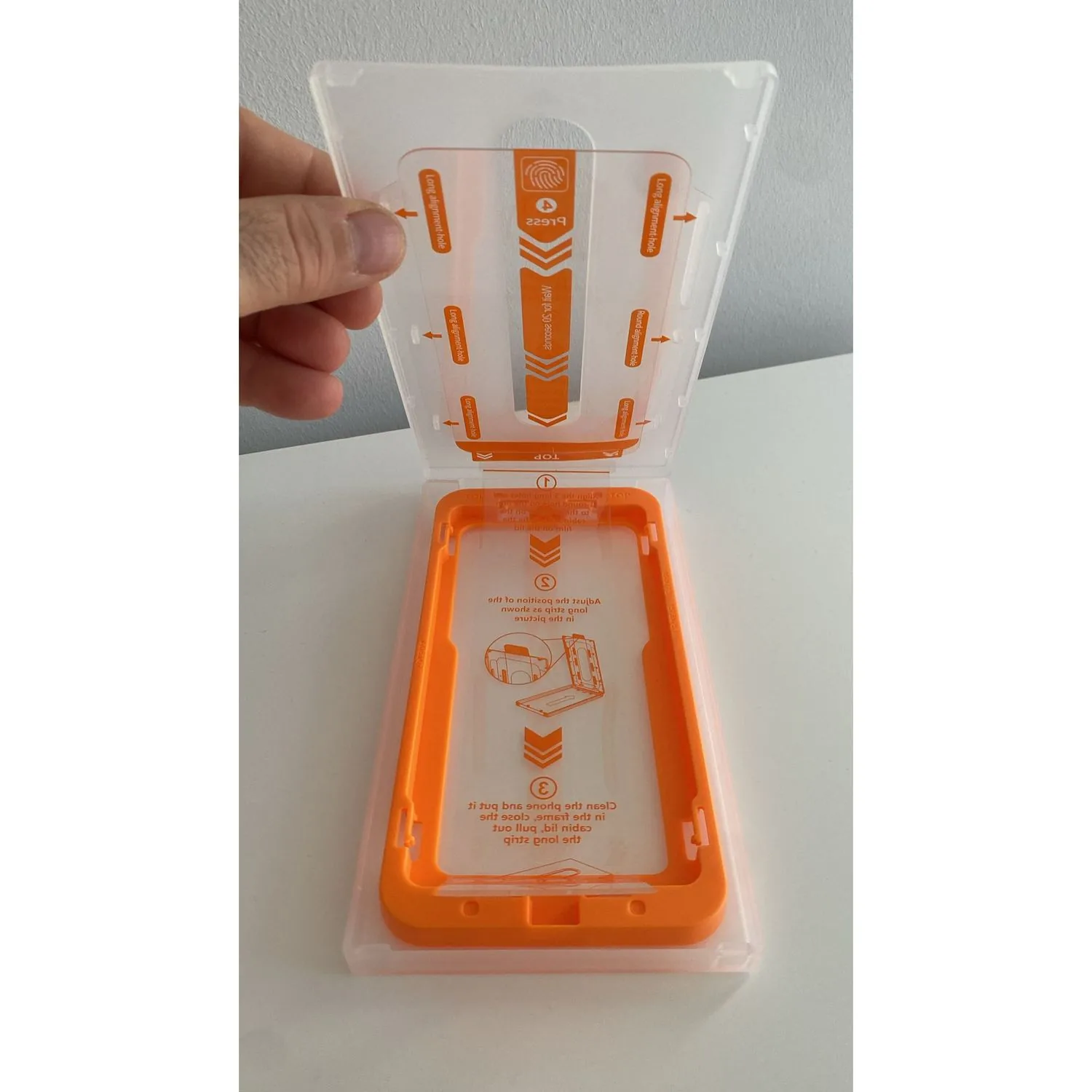
What arrives from the client, and what goes on the listing. Same object, same angle.
How a new device generation gets covered
Reference in
The client photographs the physical part on a desk. That snapshot, plus dimensions, is the whole brief.
Device modelling
The handset and the applicator are modelled to real dimensions, because the case friendly margin and edge coverage are both selling points.
Glass and coating
Transparency, refraction and coating behaviour. This decides whether the render reads as tempered glass or as plastic film.
Variant set
Clear, privacy and anti-reflex built from one scene, each demonstrating the property that separates it.
Packaging
Front artwork, the installation sequence on the back, and the flat dieline, all checked before print.
What was delivered
Selected work


Your product, before it ships
One test render for $130, credited back against your first full project.
Book a test render