A pro AV catalogue built from geometry, not photography
JAH sells LED walls, moving heads and line arrays. It is hardware that ships on pallets and gets flown over an audience, and none of the imagery here came from a camera.
- Client
- JAH Audio Corp
- Market
- United States
- Categories
- Audio · Lighting · LED
- Scope
- Product renders, angle sets
One brand, three industries that never look alike
LED video, stage lighting and touring audio are three separate photographic problems. In one catalogue they have to look like one company.
JAH sells into houses of worship, touring and permanent installs, with LED screens, lighting fixtures and line arrays sitting next to each other in the same catalogue. Photographed, each category pulls its own way: a video wall either sits dead or blows out, a black fixture loses every edge it has, and a flown array needs a rigging crew before the camera is even set.
Modelled instead, all three share one lighting rig, one background and one camera height. Nothing has to be matched up afterwards in retouching, because it is the same scene every time.
The back of the cabinet is where the decision happens
Nobody picks an LED panel on pixel pitch alone. They pick it on how fast it goes up and how fast a part comes out.
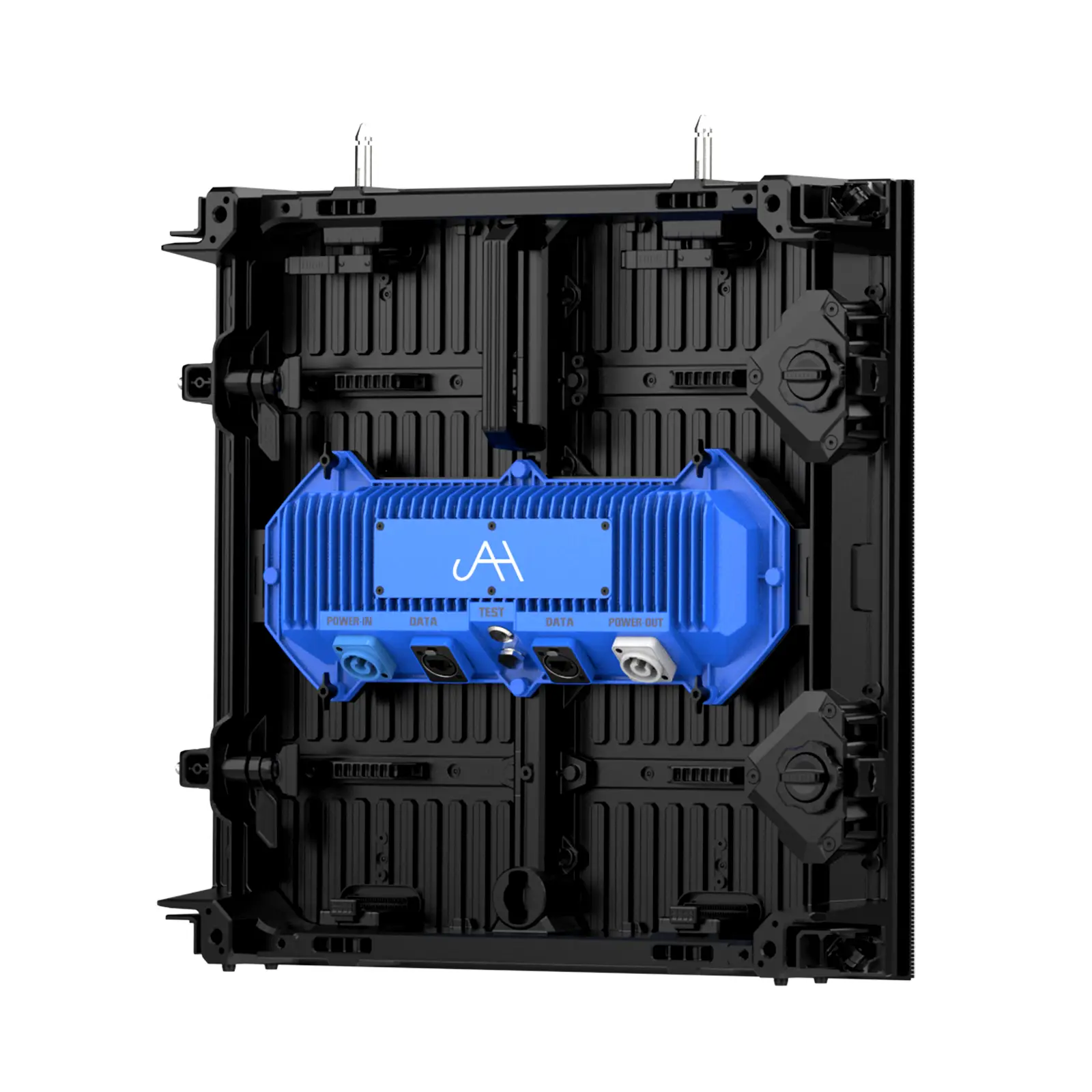
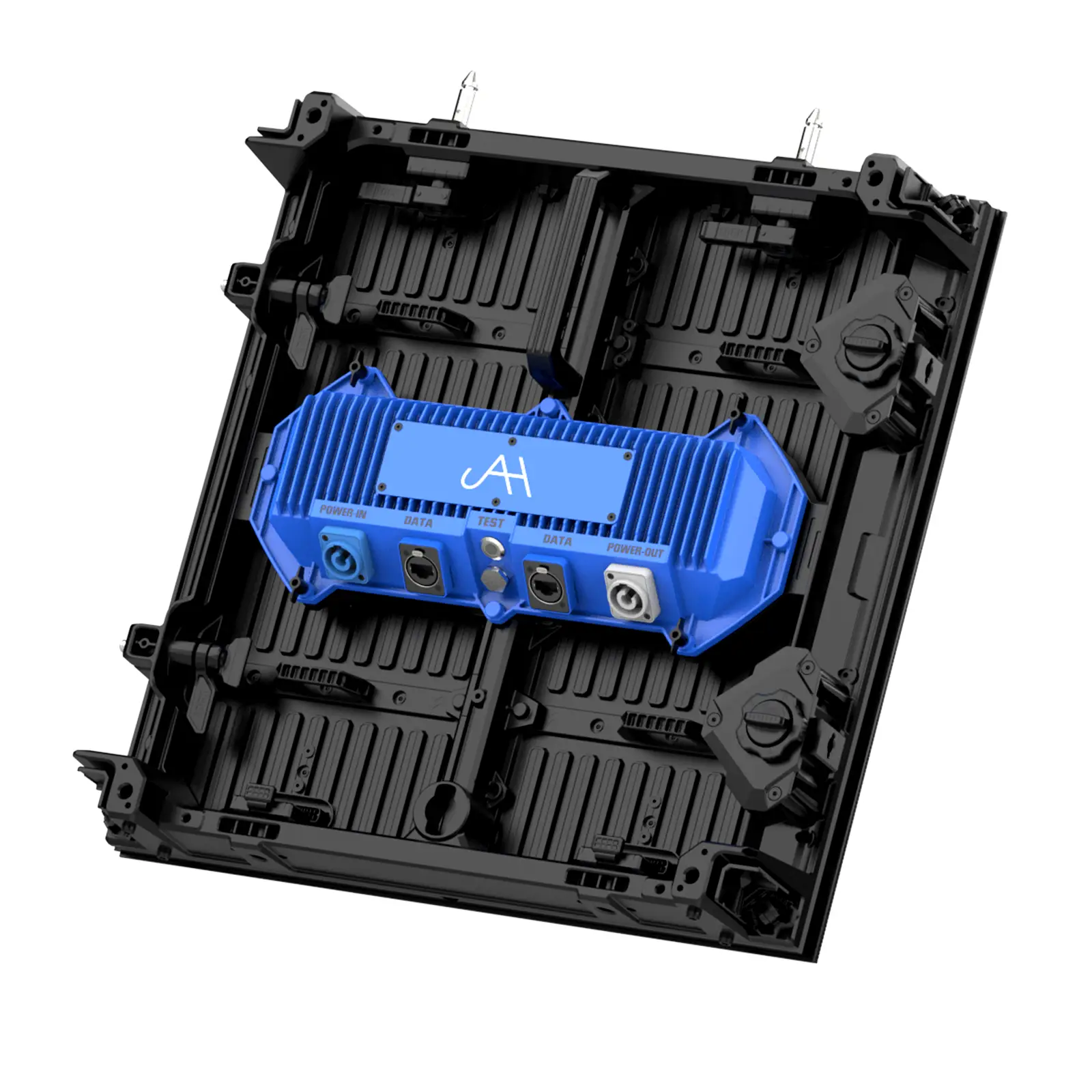
The rear of the cabinet carries the whole argument: power in and power out, data in and data out, a test point, quarter turn locks at each corner and captive alignment pins along the top edge. Rendered, every one of those can be labelled, lit and shown at the angle that makes the connector type readable.
A photograph of a black cabinet in a dark room gives you none of that. Everything that justifies the price gets flattened into one shape.



A product whose front is a flat grey rectangle
Powered down, an LED panel is a dark grid. That is also precisely what a buyer needs to inspect.
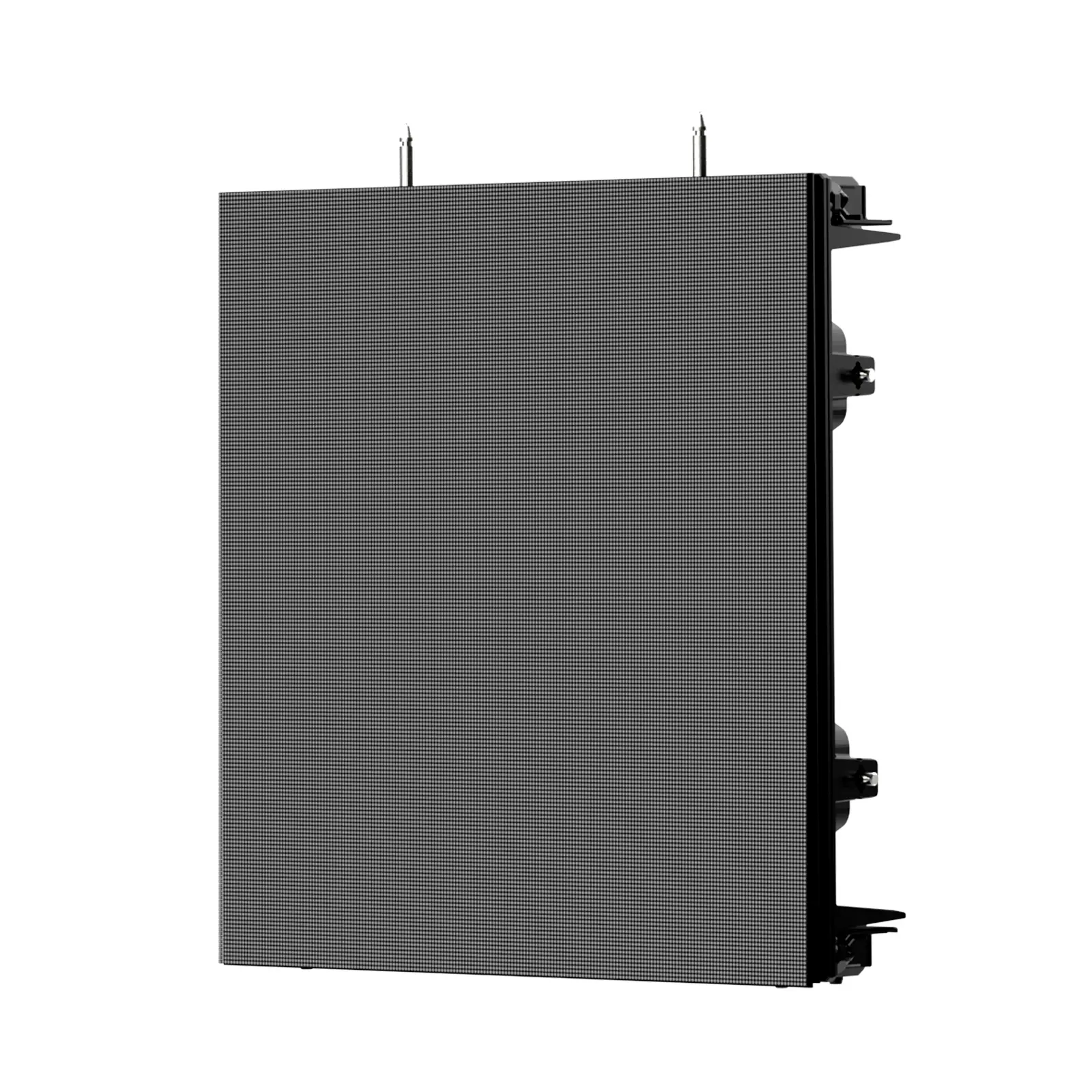
Louvre spacing, mask geometry and the seam where two cabinets meet are what separate a screen that holds up on camera from one that moirés. JAH sell theirs as optimised for on camera performance, so the surface itself has to be inspectable. Shown flat and orthographic, the pitch is legible. Shown angled, the cabinet depth and the top rigging bar come with it.
This is the shot photography handles worst. A real panel either sits unlit and mirrors the room back, or is driven bright enough to erase every mechanical detail around it.

Versa Advanced, from every side the spec sheet claims
A rotating lens array, individual pixel control and a wide zoom range are all movement. A still image has to imply them.
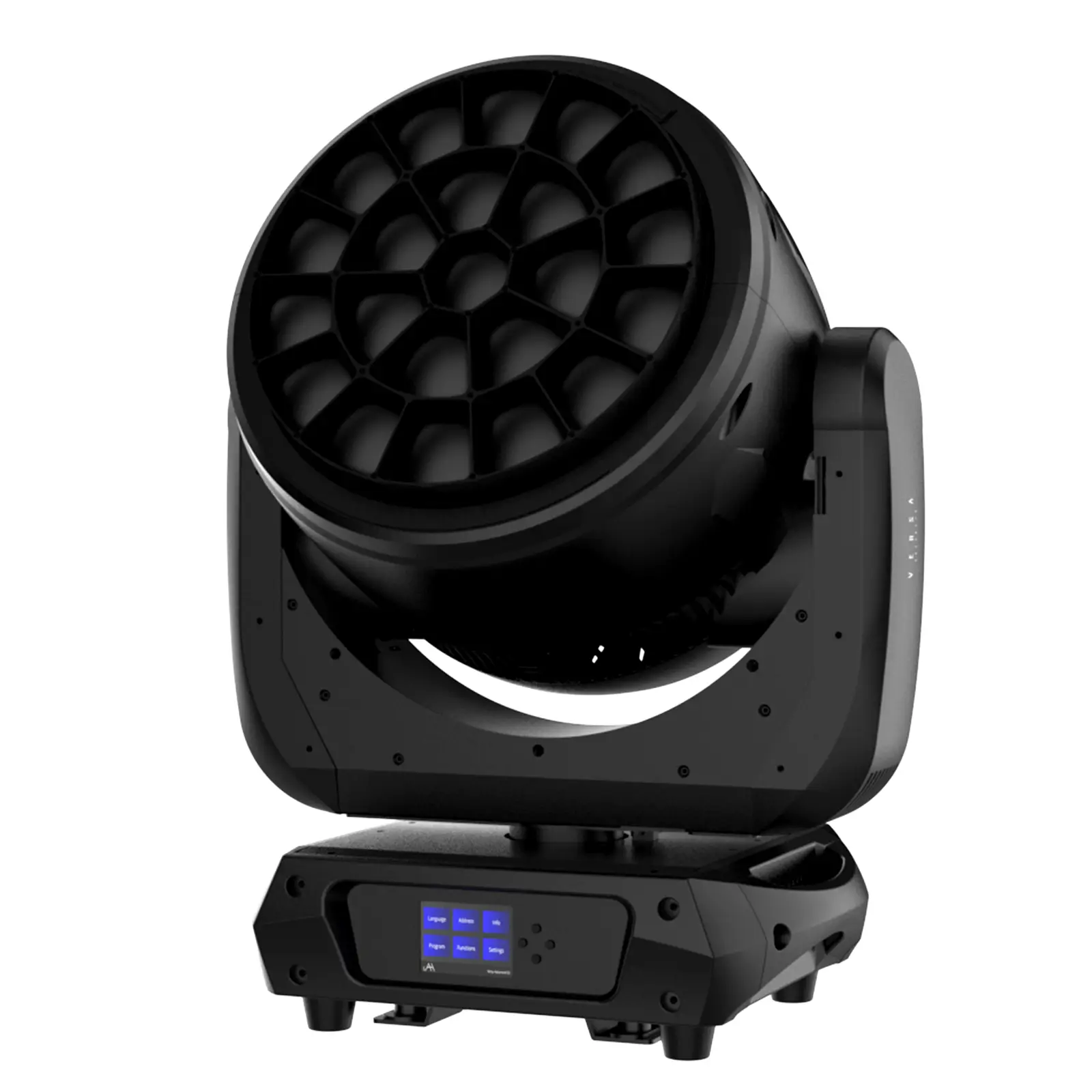
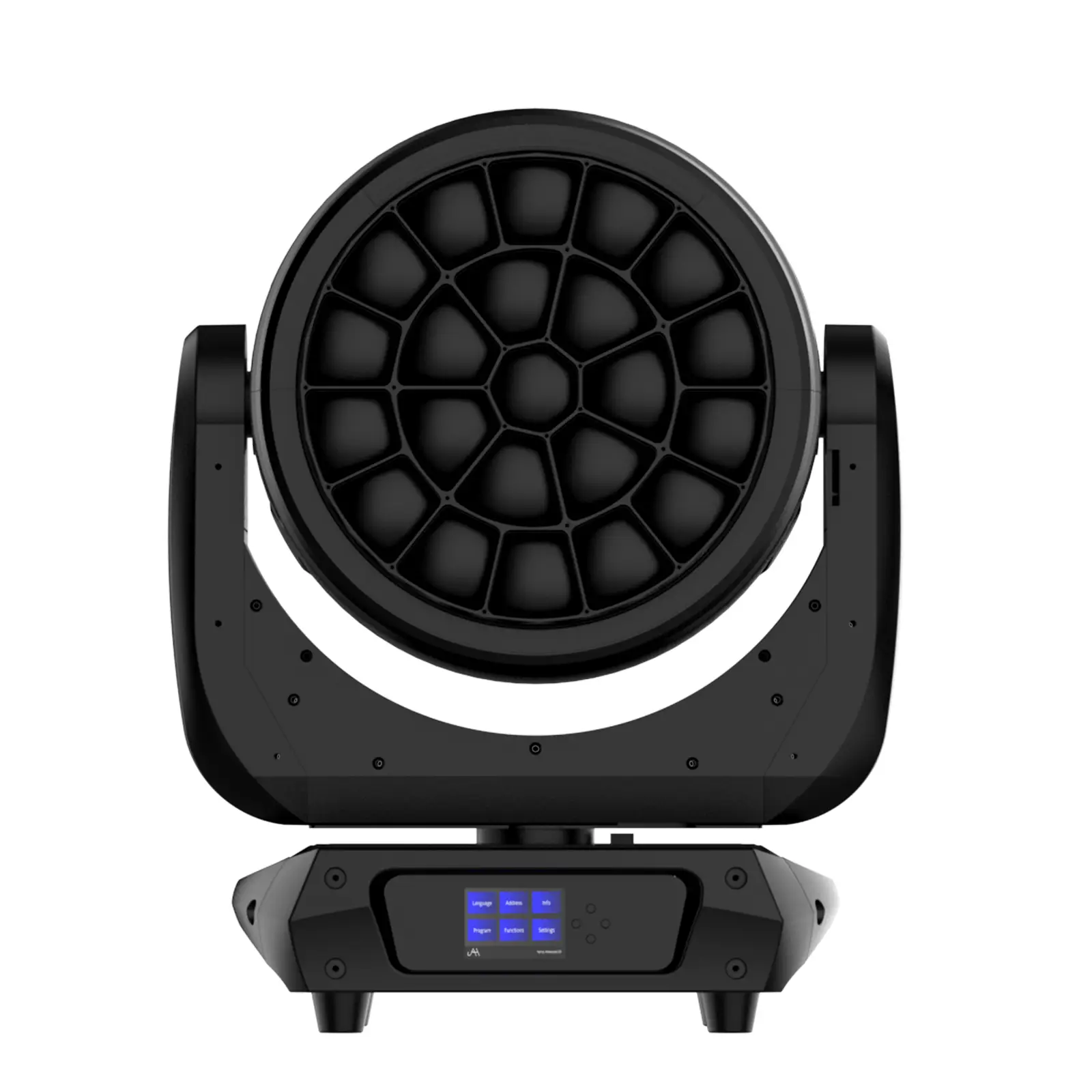
The head is shown level, tilted and rolled from one scene, so the range of articulation reads across the set instead of being claimed in a caption. The lens array is rendered straight on, where the cell geometry driving the pixel effects is actually visible, and again at an angle, where the yoke and the depth of the head are.
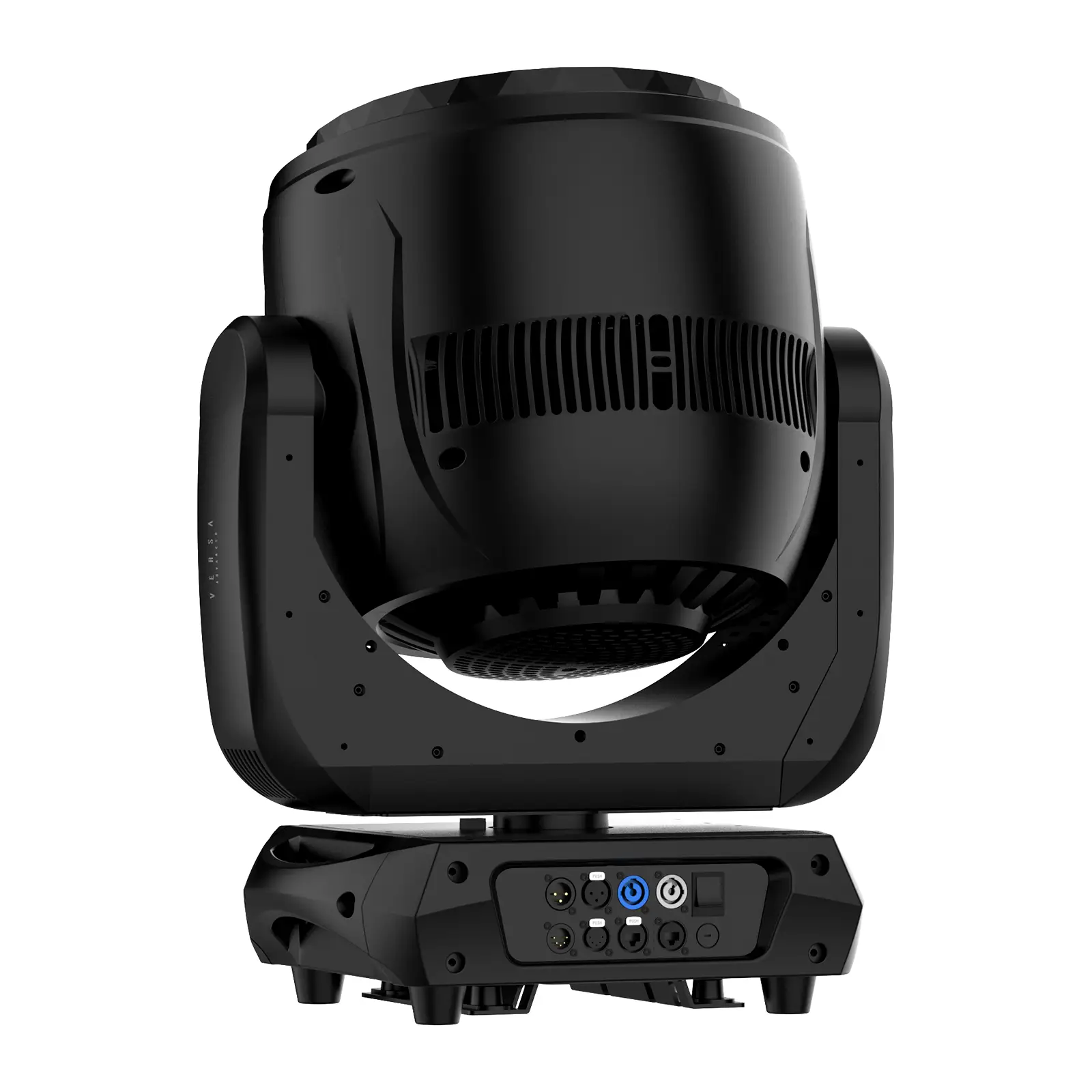
The rear panel gets its own frame: DMX in and out, power in and out, and the control display on the base. Integrators check that panel before they check anything else, and on a black fixture under studio light it is the first thing to disappear.


The product is the hang, not the box
Nobody buys one line array cabinet. They buy a flown system, and what they are judging is the curve.
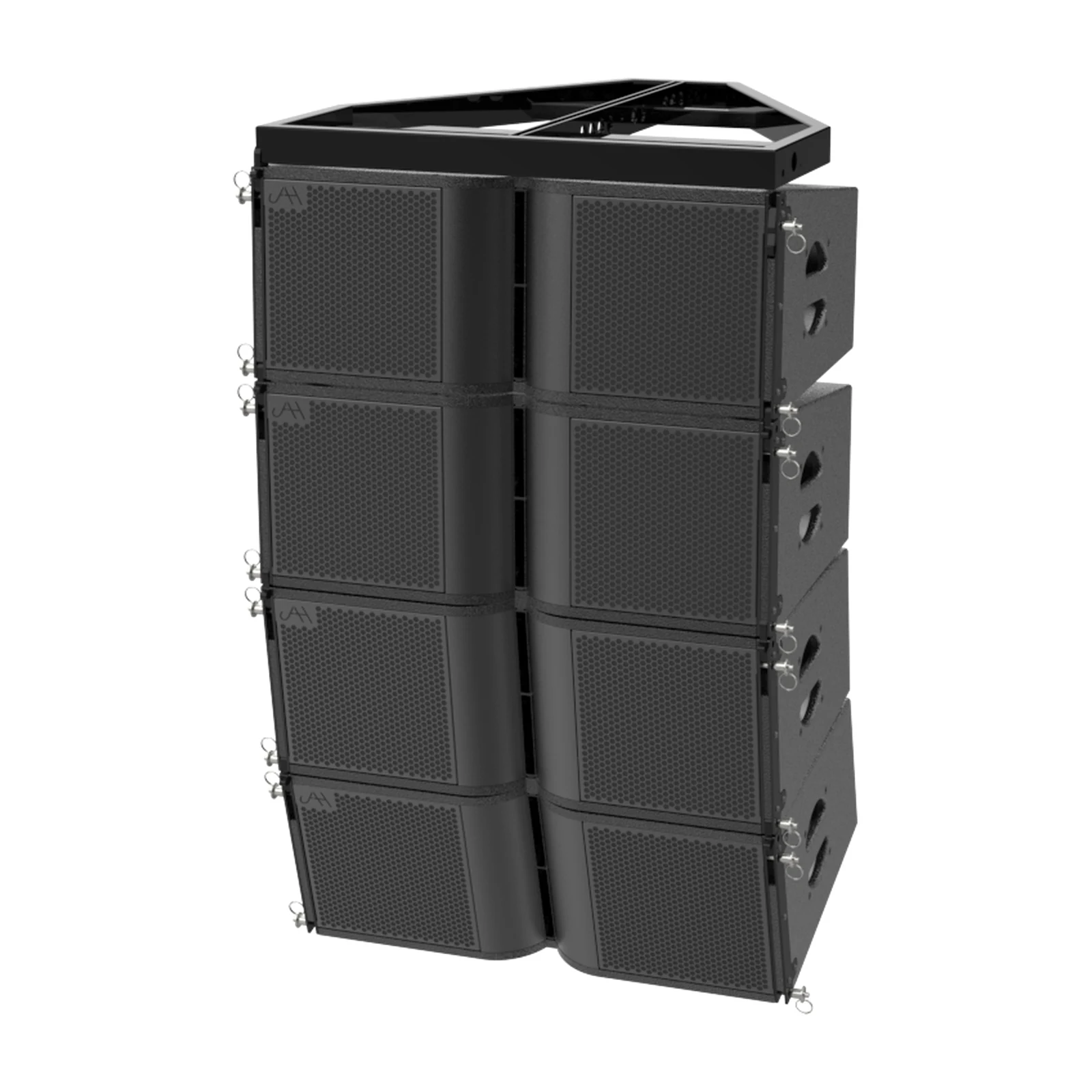
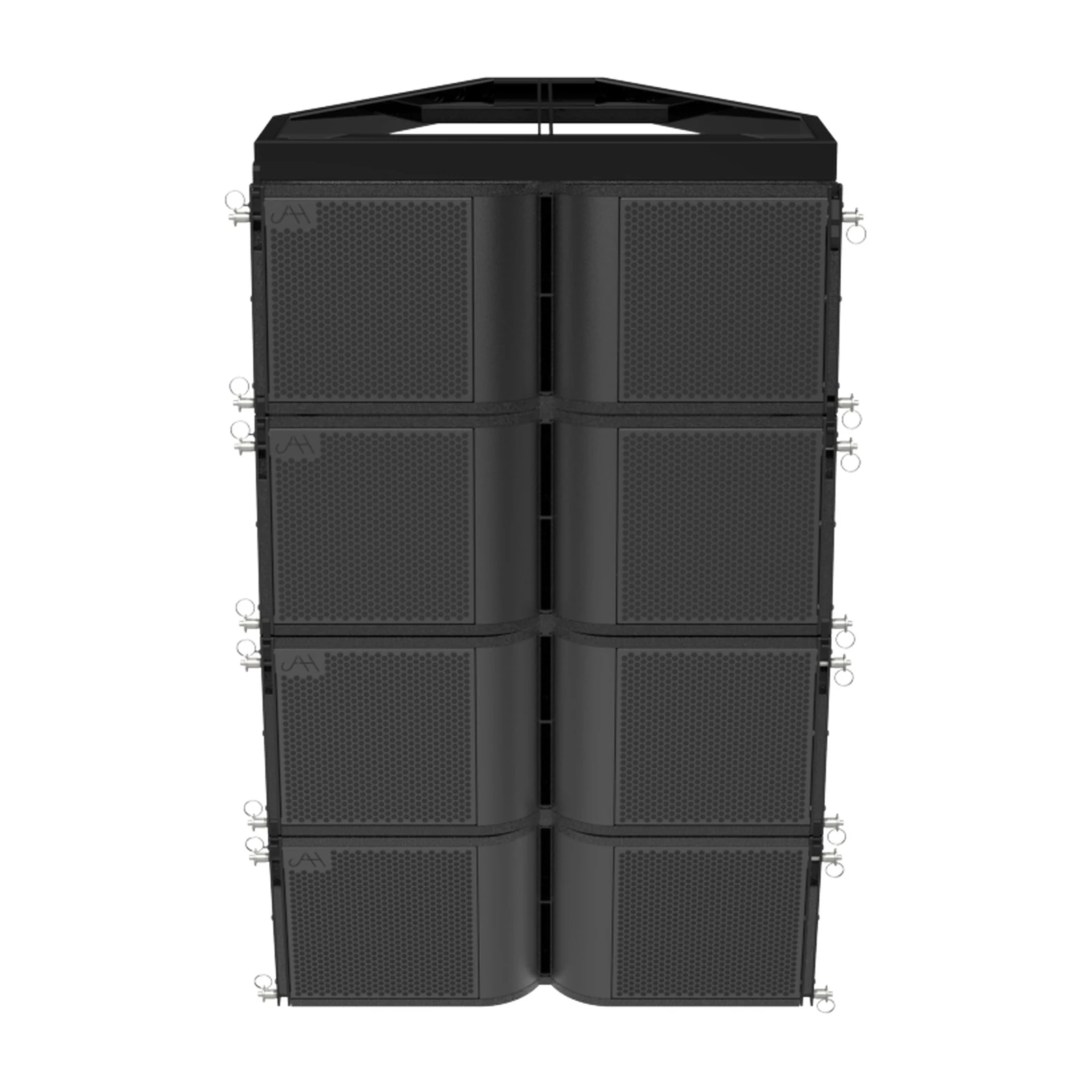
A single cabinet tells a buyer almost nothing. Four boxes and six boxes under a fly frame, with the splay set and the rigging hardware in place, tells them how the system sits in a room and whether it clears the trim height they have. JAH build the JLA series around a three point rigging system, so the geometry is the selling point.
Because the array is built in 3D, the six box version is the four box scene with two more cabinets added, and the front, front quarter and rear quarter angles all come out of one setup. Rigging that array for a camera costs a crew, a motor and a day.


How a fixture gets covered
CAD in
Mechanical files and dimensioned drawings come in from engineering. Nothing has to exist as a finished unit yet.
Cleanup and finish
Internal geometry stripped back to what renders. Textured black housings, perforated grille cloth, moulded connector shrouds and anodised trim built against the real finishes.
One scene, all angles
Front, rear, sides, both perspectives and the orthographic views are set up once and shot from a single scene, so the whole set matches.
Hardware detail
Rear panels, IO, rigging points and locks rendered close enough to read a connector type, because that is what an integrator checks first.
System views
Full hangs and array curvature, assembled from the same cabinet model instead of built again.
Delivery
Square WebP files at consistent framing across every category, so the catalogue grid stays even.
What was delivered
Selected work
Your product, before it ships
One test render for $130, credited back against your first full project.
Book a test render